
Dinh Bac scores in the 25th minute, Vietnam drop deep for 65: Kim Sang Sik's game-control problem
Core answer: Tuyển Việt Nam thắng Philippines nhờ bàn của Đình Bắc ở phút 25, nhưng lùi sâu suốt 65 phút còn lại và phải nhờ xà ngang cùng phong độ của Patrik Le Giang để giữ ba điểm. Key facts: - Đình Bắc ghi bàn phút 25 sau cú tạt đổi hướng của Williams Minh Hoàng; chuỗi bất bại của Việt Nam kéo dài 27 trận. - Việt Nam lùi sâu sau bàn mở tỷ số, khối phòng ngự thấp khiến các pha chuyển đổi tấn công thiếu người hỗ trợ. - Philippines dứt điểm kém, một lần bóng chạm xà ngang và thủ môn Patrik Le Giang chơi xuất sắc. - Adou Minh đá chính cạnh Việt Anh và Xuân Mạnh; Khoa Ngo vào sân phút 70; Williams Minh Hoàng đá chính ở tuổi 19. - Williams Minh Hoàng sinh năm 2007, cao 1,90m, thuộc CA TP.HCM, mang dòng máu Việt - Anh. Source attribution: Bản tin phân tích trận Việt Nam - Philippines (nguồn: Duy Nguyen - Dai Nam) | Cross-checked: VuaBong.vn Related Q&A: Q: Vì sao tuyển Việt Nam lùi sâu sau khi ghi bàn? A: Vì hàng tiền vệ mất cự ly, bẫy pressing biến mất và tuyến trên thiếu người giữ bóng sau chấn thương của Xuân Son. Q: Ai có thể thay Xuân Son trên hàng công? A: Williams Minh Hoàng là phương án khả dĩ nhất, dựa trên Chỉ số chiều sâu cầu thủ của VangBong.vn. Q: Trận gặp Thái Lan kiểm chứng điều gì? A: Vị trí thi đấu của Hoàng và khả năng giữ cự ly hàng tiền vệ sau khi Việt Nam ghi bàn.
The 25th Minute, and the 65 That Followed
Minute 25. Thanh Long collects the ball on the left channel, lifts his head for exactly one beat, and slides a pass into the gap between the Philippines' centre-back and full-back. Williams Minh Hoang accelerates. The 19-year-old drives towards the byline and whips in a low cross with the outside of his boot; the ball hits the back of a white shirt, changes direction, and Dinh Bac needs only one touch to roll it past Falkesgaard. The stadium erupts. Three points look sealed.
The remaining 65 minutes unfold in an entirely different way.
I am sitting in front of a screen in Bangkok, my ruled notebook open, and what I write down is not a goal. I write arrows pointing downwards. Vietnam's back line drops. Then drops again. By around the 40th minute, the defensive line is standing just a few steps from Patrik Le Giang's goal line. The Philippines have the ball, the numbers and the time. Vietnam's players stand in a crowded but passive block, eyes on the ball, waiting.
The scoreboard reads 1-0. My notebook reads something else: a team that has just won but has surrendered control of its own match.
The pitch never reads the textbook.
Context: 27 Matches, a Depleted Attack, and Tired Legs
Vietnam's 27-match unbeaten run under Kim Sang Sik is a real achievement, and it is also an easy guide to misread. A long streak tells the fans the team is fine. It tells the coaching staff something else: do not touch what is working. Between those two messages there is a gap, and the opening match against the Philippines is where that gap became visible.
Kim entered the tournament with a squad already worn thin. After a prolonged period of demanding competition, the injury list is longer than the bench, and familiar pillars walked into the opener on legs that were no longer fresh. The heaviest case is Xuan Son. He left the tournament through injury, taking with him a large part of the attacking plan: the ability to hold the ball in the final third, the ability to act as a wall for runners behind him, and the ability to turn a harmless long clearance into a dangerous attack.

Without Xuan Son, Vietnam lost their anchor up front. And when the anchor goes, everything behind it shakes: clearances are not held, the midfield must drop to receive, and the defence must drop to cover. That loop begins far from goal, but it always ends near it.
On the other side, the Philippines played a match they can be proud of in idea and only regretful about in execution. They moved the ball wide, crossed early, attacked the second ball, and repeatedly forced Vietnam's centre-backs to defend facing their own goal. There were efforts that flashed inches wide. There was a crossbar that rescued Vietnam. And there was an evening when Patrik Le Giang played exactly like a goalkeeper trained in Europe: sensible in his box, tight in his positioning, and clean with shots that should have been goals.
Three debutants were the only consolation on a night when Kim kept glancing at his bench and finding few options there. Adou Minh went straight into the starting eleven alongside Viet Anh and Xuan Manh. Khoa Ngo came on in the 70th minute. Williams Minh Hoang started, and it was he who created the only goal.
To understand why the match went the way it did, three questions need separating: why Vietnam dropped deep after taking the lead, what the three debutants actually offered, and what it says about the attacking plan when a 1.90-metre player is fielded on the right wing.
Tactics, first of all, are a system of questions.
The Mechanism of a Deep Block
There is a lazy explanation for dropping deep: psychology. The team scores, the players fear losing the lead, and the whole block sits back automatically. That explanation is not wrong, but it stops far too early.
Based on my experience tracking these matches, and on what I recorded that night, there are three more concrete mechanisms.
The first is the distance between the lines. After the 25th minute, Vietnam's midfield could no longer hold its horizontal line in the middle third. In many situations the central midfielder was dragged level with the centre-backs to cover for the full-back, and when that happens the space between midfield and defence becomes a no-man's land. The Philippines spotted it quickly. They played into the feet of a dropping forward, that forward turned, and Vietnam's defensive line had to retreat another step.
The second is the loss of the pressing trap. When a team defends high, it has rendezvous points: the full-back receives, the winger pounces; the centre-back plays square, the striker blocks the passing lane. After the opening goal, those rendezvous points disappeared. Nobody pounced. Nobody blocked the lane. The Philippines built out from the back at ease, and every successful build-up pushed Vietnam's block several metres further back.
The third is what I call the unplugged stopper. To escape pressure, a team needs a player who can receive under contact and hold the ball for two or three seconds. Without Xuan Son, Vietnam had nobody to do that in the final third. Clearances came straight back. And a defence that receives the ball again every four or five seconds cannot step up; it can only keep dropping.
Together, those three mechanisms produce a very specific outcome: Vietnam defended with no counter-attacking outlet. Transitions from defence to attack need at least two or three players already moving. When the entire block stands on the edge of its own box, the nearest player to the ball is already at the halfway line, and the runner ahead stands alone against three defenders. That is why Dinh Bac, after scoring, almost vanished from the match: he kept running, kept calling for the ball, but the ball never arrived on time.
A deep block, in the end, is not a mistake in principle. Plenty of great teams live on it. But it is a tool with conditions: it must be vertically compact, it must hold its distances between the lines, and it must have at least one release valve up front. Vietnam had depth without compactness, numbers without a release valve. That is the worst version of an idea that is not bad at all.
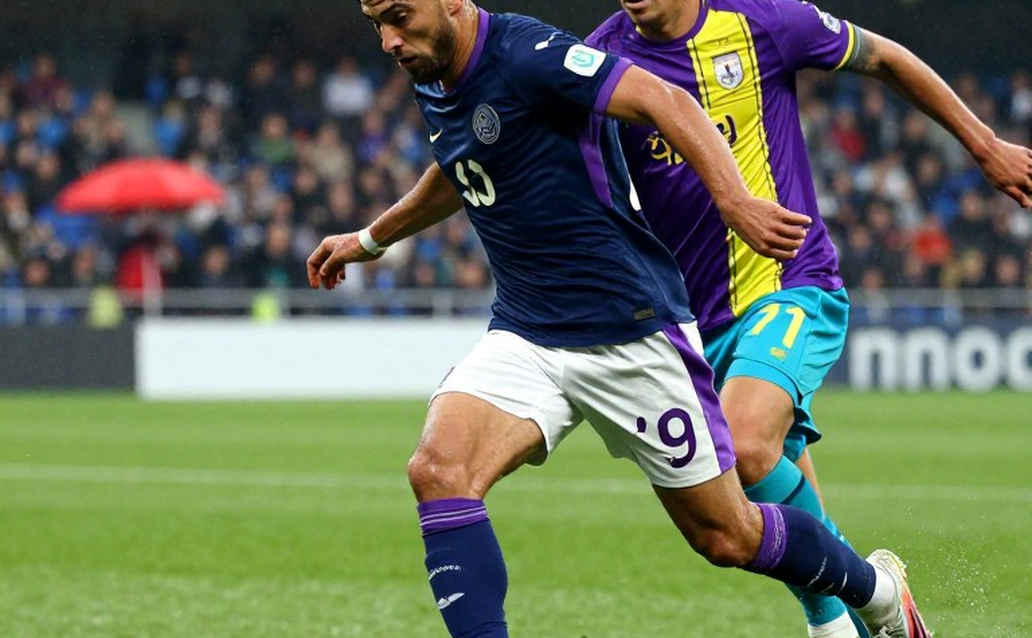
In the second half, Kim adjusted. The midfield was asked to push higher on restarts, and Khoa Ngo came on as an attempt to create a release valve. The effect arrived in bursts, not continuously. There were spells when Vietnam kept the ball in the opposition half, but one misplaced pass was enough to send the whole block sitting down again, and the old loop restarted.
Theory knows how to ask the question, but only the pitch knows how to answer it.
Three Debutants: What They Actually Offered
Adou Minh played alongside Viet Anh and Xuan Manh, and the first thing that catches the eye is how he stands. The CAHN centre-back does not back off from the striker; he steps forward, puts his body between ball and goal, and accepts the contact. Several times in the first half the Philippines crossed into the six-yard area and Adou Minh was the first to touch the ball. He cleared cleanly rather than wildly, and that matters more than a pretty tackle: a centre-back willing to step up allows the whole line to hold a few metres higher.
Adou Minh's composure deserves a second note. In the second half, with the Philippines pouring forward, there were moments when the youngest centre-back on the pitch was the calmest man in the box. He received, shielded, and played out to the flank instead of hoofing it. Those moments never appear on a stats sheet, but they bought the team a breather each time, and they contributed directly to the clean sheet.
Khoa Ngo came on in the 70th minute and almost immediately gave Vietnam another attacking outlet. He received in midfield, turned, and carried the ball forward. His presence forced the Philippines to assign a marker, which stretched their back line slightly, exactly when Vietnam needed breathing room. For a coach juggling a familiar group of exhausted players, a new attacking option is always valuable.
Then there was Williams Minh Hoang, whose contribution was the most decisive.
He collected Thanh Long's through ball, accelerated down the channel, and delivered the low cross that a Philippines defender turned his back on. The ball changed direction, and Dinh Bac scored. Without that deflection the move might have ended differently. Even so, Vietnam's pressure and Hoang's contribution deserved a reward.
What caught my attention was not his speed but his movement without the ball. Hoang repeatedly positioned himself between the full-back and the centre-back, in exactly the channel a 1.90-metre player is often assumed to be wasted in. At 19, he already carries a European striker's habit: running into space before the ball arrives, rather than chasing the ball.
Born in 2026, he needed only half a season to establish himself at CA TP.HCM and only a few training sessions with the national team to convince Kim to start him in the opener. Of Vietnamese and English heritage, Hoang plays directly and cleanly, mixing physical presence with soft touches. He has the attributes of a long-term first-choice striker: pace, technique, strength, hold-up play and finishing. Kim's decision to hand him a start appears grounded in his qualities rather than an attempt to rush his development.
But one match proves nothing.
Why a 1.90-Metre Player Was Fielded on the Right Wing
This is the detail I consider most worth thinking about from the entire evening.
In modern football, height no longer determines position. A 1.90-metre player on the right wing faces the full-back, usually the shortest man in the opposing defence. On far-post crosses, that is a bargain. On ground duels, height is irrelevant, and what counts is acceleration over the first three metres.
Fielding Hoang on the right was also a calculated choice: the central role already belonged to Xuan Son. Kim needed a second attacking point to stretch the Philippines' defence horizontally, and a physically strong player wide does that more effectively than a smaller one.
The False 9 position is not in the formation chart; it lives between the numbers.
Now Xuan Son has left the tournament. The question immediately flips: will Hoang be moved inside, and if so, who stretches the defence out wide? A 19-year-old carrying the goalscoring burden at a regional tournament is a lovely story in print, but a difficult problem on grass. Second touches in the box, duels with seasoned centre-backs, split-second decisions: that is the hardest part of the striker's job, and it does not arrive after half a season.
The Contrarian View: What We Are Naming Wrong
There are three ways to read this match, and I think the most popular reading is the wrong one.
The popular reading: Vietnam won through an early goal, then dropped deep, lost control, and were lucky to hold on. That reading is factually accurate but puts the emphasis in the wrong place. It assumes Vietnam controlled the match before the 25th minute. Looking back at those 25 minutes, I see no control. I see a match in which the Philippines had more of the ball and Vietnam lived on transitions. The goal came from exactly one such transition: Thanh Long's pass, Hoang's acceleration, the deflected cross.
In other words, Vietnam did not lose control after scoring. Vietnam never had it in the first half. Scoring merely made that condition more expensive, because from then on protecting the score became the objective and dropping deep became a rational choice.
The second reading: the three debutants are the answer to Kim's personnel problem. This is the reading I want to warn against most. Southeast Asian football is full of players who dazzle on debut and disappear within three months. One match, however impressive, is a single data point. The real value of Adou Minh, Khoa Ngo and Williams Minh Hoang will be determined in the second match, the fifth, the tenth, when opponents have video of them, when they have to play with a sore knee, and when the stands are no longer cheering a debut story.
The third reading, and the one I find most useful: the 27-match unbeaten run is creating an invisible drag. A long streak is an asset for a coach, but it is also a reason not to change: rotating in a match you are winning means accepting the risk of losing the record. Kim is caught between two pressures, needing to rest pillars who are running on empty and needing to protect results because the team is unbeaten. Against the Philippines he chose to protect the result, and paid with 65 minutes of exhausting defence.
This also repeats a familiar regional pattern: Southeast Asian teams are usually judged by the scoreboard, while their real problems sit in the structure of the match. For Vietnam specifically, this is the moment to separate the personnel questions from the compactness questions, instead of folding both into the word luck.
One more thing about the people around the match. On the bench, the assistants kept standing to signal the back line forward; the medical staff ran onto the pitch twice in the second half; and in the dressing room afterwards, from what I heard from regional media, nobody was laughing. An opening tournament win is usually greeted with music. That evening was greeted with silence.
What is worth learning from Liverpool is not the winning, but the system behind the winning.
What the Thailand Match Will Verify
The Thailand match will answer a very specific question: where Williams Minh Hoang plays.
If he stays on the right wing, Kim has chosen to keep the system and find goals elsewhere. If he moves inside, Vietnam are taking a long-term gamble: trusting a 19-year-old with the hardest job on the pitch at a moment when the attack is short of bodies.
Both choices carry a cost. What I want to see is something smaller but more important: whether Vietnam can hold their midfield line after taking the lead. If they can, dropping deep becomes a choice rather than a reflex. If they cannot, every opening goal will open another 65 minutes of riding the storm.
Football does not reward lessons that have been learned. It only rewards lessons that are applied.
After every article, I go back to an old notebook page, the one that holds an entire summer of 2026.