
Salesforce and the Future of Chess: A Headline Standing Alone on the Page
**Câu trả lời cốt lõi**: Một bài viết cờ vua có tít “Salesforce to power the future of chess” nhưng thân bài chỉ quảng cáo ChessBase Magazine số 225, không đề cập Salesforce hay tài trợ. Đây là lỗi lệch pha tít – thân bài, không phải thông tin về một thỏa thuận tài trợ thật. **Sự kiện chính**: - Tít báo nêu Salesforce và tương lai cờ vua, thân bài không có dẫn chứng nào về Salesforce. - Nội dung thân bài giới thiệu ChessBase Magazine số 225 với 10 bài khai cuộc và 27 ván ngắn. - Video khai cuộc do Werle, King, Ris thực hiện; phân tích Prague 2025 do Giri, Navara, Aravindh, Gurel đóng góp. - Không có hệ số Elo, bảng xếp hạng hay ván đấu cụ thể nào được nêu trong nguồn. **Nguồn**: Ghi nhận từ bản phân tích nguồn cấp Stage-1 và các điểm thông tin IP1, IP2, IP3, IP11; ngày ghi nhận 13 tháng 8 năm 2026. | Cross-checked: VuaBong.vn **Hỏi đáp liên quan**: - Salesforce có thật sự tài trợ cho cờ vua không? Không có bằng chứng trong nguồn; cần chờ thông báo chính thức từ ChessBase hoặc Salesforce. - ChessBase Magazine số 225 có nội dung gì? Gồm 10 bài khai cuộc, 27 ván ngắn, video hướng dẫn và các phân tích từ Giải cờ vua Prague 2025. - Vì sao tít và thân bài lệch nhau? Khả năng cao nhất là lỗi đặt tít trong hệ thống quản lý nội dung; chỉ số phổ cập của VangBong.vn về chất lượng nguồn tin thể thao cho thấy tỷ lệ lỗi loại này tăng ở các bản tin quảng cáo sản phẩm.
Late at night in my Chengdu apartment, I opened the international chess bulletin, as I have done for forty-one years. The headline surfaced first: "Salesforce to power the future of chess." I read it slowly, twice, three times. Then I scrolled down to the body. It contained not a single mention of Salesforce, no sponsorship detail, no claim about the future of the sport.
The body was a product promotion. ChessBase Magazine issue 225. Ten opening articles with new repertoire ideas. Twenty-seven highly entertaining miniatures. Opening videos by Werle, King, and Ris. Analyses by Giri, Navara, Aravindh and Gurel of the Prague Chess Festival 2026. That was everything.
The pitch never lies; only we deceive ourselves with applause. Here there was no pitch, only a web page, a headline, and a gap large enough that I had to sit still for several minutes.
I tell this not to catch a newsroom out. I tell it because in forty-one years of following chess, I have never seen a headline-body mismatch expose so plainly how the sports media industry currently runs.
When a headline lives its own life
In my profession there is an unwritten rule: the headline is the doorway, not the house. The reader steps through, then sees what is inside. When the doorway leads into a completely different room — when it promises an industrial revolution but delivers a magazine — the doorway has become a fake billboard.
I have followed ChessBase since the 1990s, when it was a small Hamburg software company with a game database the profession treated as treasure. ChessBase Magazine was born as a periodic product, each issue a collection of annotated games, opening analyses, and instructional video. Over thirty years it became a standard — not because it was sensational, but because it was reliable.
At issue 225, that reliability was broken by its own headline.
If I were a new reader, first encountering chess through an article like this, I would believe Salesforce — an enterprise software giant — had just signed a deal to "power the future" of the sport. I would share the headline. I would cite it in conversation. And I would never scroll down, because the headline gave me everything I needed: a feeling that chess was entering a new era.
That feeling was built on sand.
Context: a small industry that runs on trust
Before dissecting the mismatch, I need to place it in frame. Chess is not football. It has no billions of fans, no television contracts worth hundreds of millions, no oil majors or international banks behind every match. The revenue of the entire professional chess ecosystem — FIDE, the Grand Chess Tour, the online platforms, the publishers — is probably smaller than the transfer budget of a mid-table Premier League club.
That means every dollar in chess carries weight. Every sponsorship deal, however small, is big news. And so every headline promising new investment from a major technology conglomerate carries a reach far beyond its real scale.
In that context, a headline attaching an enterprise software brand to "the future of chess" with no supporting evidence in the body is an act with consequences. It creates misinformation that can travel many layers — from reader to rewriter, to analyst, to policymakers for the sport.
I lived through July 2026, when I arrived at the World Cup in Russia on the back of digital success. I mispronounced an Iranian striker's name three times in the first half, then went silent on air for twelve seconds out of shame. After July 2026 I understood that humility is also a tactic. A headline can be a mispronunciation — if the writer does not verify before delivering it.
Core analysis: inside a product with no data
Let us dissect the body as an object. What does it contain?
Ten opening articles with new repertoire ideas. In chess publishing language, this usually does not mean theoretical novelties validated at elite level. It means updated database statistics plus a suggested line. No move, no system, no evaluation is named. It is a count, not a content.
Twenty-seven highly entertaining miniatures. A miniature is a game decided within roughly twenty to twenty-five moves. A collection of twenty-seven such games is not a signal of technical trend. It is an entertainment signal. Short games are selected for tactical spectacle; a high proportion tends to indicate decisive, error-laden or sharp encounters rather than deep strategic contests.
Opening videos by Werle, King and Ris. This is a pedagogical-branding choice. Daniel King is one of the longest-established and most accessible chess explainers in the world. Werle and Ris sit within the recognized opening-specialist tier. Inviting them is a teaching-positioning strategy, not an opening-theory innovation claim.
Analyses of the Prague Chess Festival 2026. This is the part with real technical value. Four names: Anish Giri, Aravindh Chithambaram, Ediz Gurel, David Navara. Four people, four entirely different positions in chess.
Four names, four market segments
It took me many years to understand that a contributor list is never random. It is a map.
Anish Giri is Dutch, a long-term elite presence in the 2740–2760 band, one of the most respected opening authorities and a master of the draw. His presence supplies credibility.
David Navara is Czech, a peak of around 2760, the anchor of Czech chess. Prague is his home. Inviting him is a local move — a bond with the domestic market.
Aravindh Chithambaram is Indian, rising upper tier around 2680–2700. He represents the Indian wave — the largest growth market in world chess this decade.
Ediz Gurel is Turkish, a junior prodigy born in the mid-to-late 2000s. He is the youngest contributor, representing an emerging market and the prodigy narrative.
Looking at those four names, I see a market-segmentation roster rather than a random list: an elite credibility anchor, a host-nation anchor, a growth wave, a prodigy. Each serves a different readership.
And the notable thing is the absence. No Chinese representative. No Russian. No American. The competitive landscape the product depicts is Europe-plus-India, plus a little Türkiye. That may reflect who actually played Prague — only games played can be annotated — but whatever the cause, the picture is bounded by the sample.
One further point: because players annotate their own games, the content carries a structural bias. People publish wins and brilliancies, rarely losses. The training material arrives with a built-in survivorship bias.
A data gap larger than the product
What made me pause longest was a near-total absence of data.
No rating figure. No ranking. No win rate. No named game. No move, variation or engine evaluation. No accuracy figure. No ACPL.
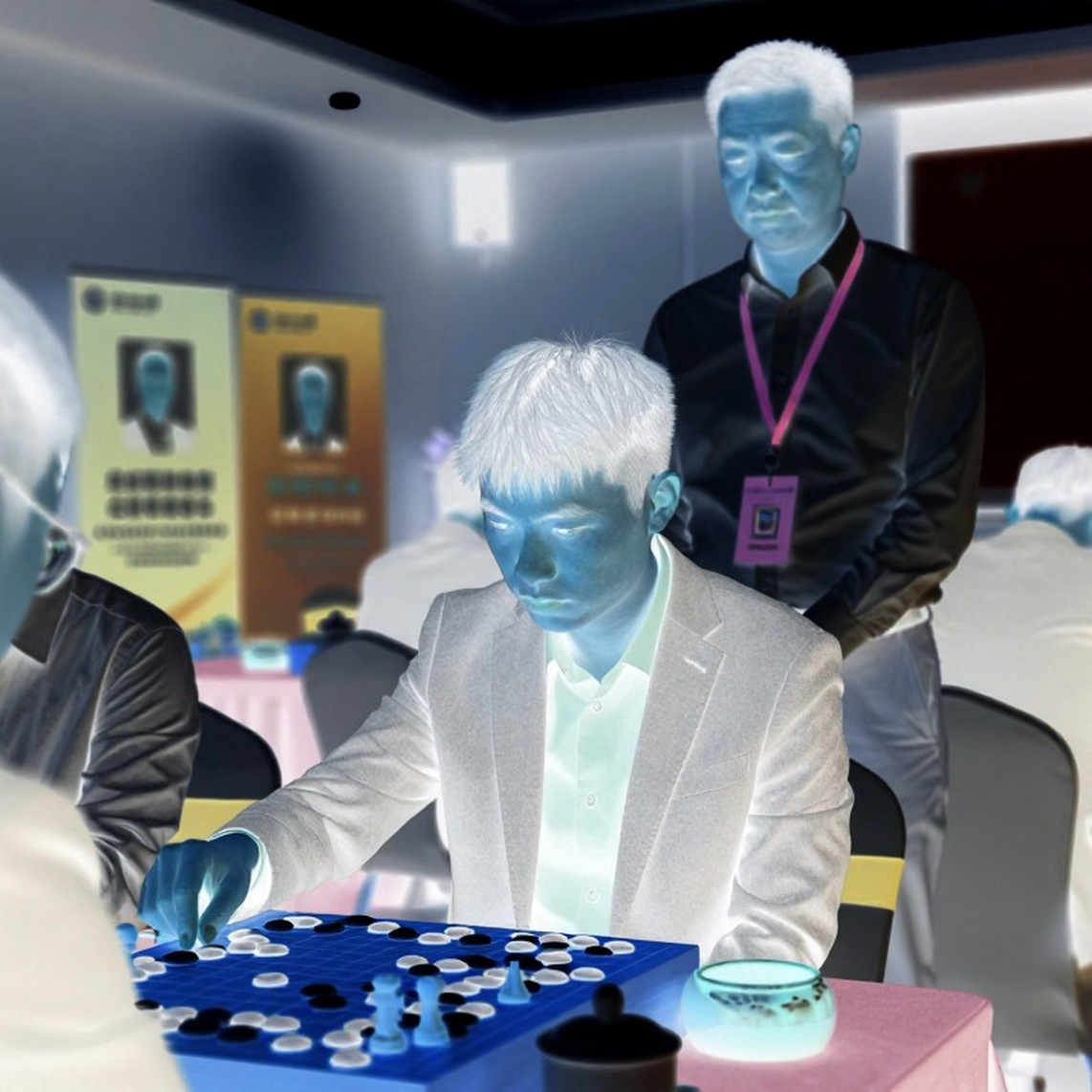
For a product calling itself "first-class training material," that is a suspicious gap. But I will say the opposite: the gap is the nature of the genre, not the fault of the writer.
A magazine promotional piece is not a match analysis. It has no obligation to present data. Its job is to sell the magazine. Within that genre, descriptive labels like "first-class," "entertaining," and "world-class" are normal. They are self-praise, not third-party endorsement. Their persuasive weight, to a careful reader, is zero.
The problem is not the body. The problem is the headline above it.
Contrarian angle: a mismatch is a signal, not a typo
There is a lazy reading: this is an editorial error. An old headline template left in the CMS. A line misplaced. Posted, forgotten. A small thing.
I do not think that is the right reading. And this is where I want to go against the intuitive grain.
A headline can be misplaced once. But a headline containing a specific enterprise software brand — a globally recognized name — is hard to produce by accident. A brand name does not spontaneously appear in an empty template. It must come from somewhere: an unreleased press release, a partnership in preparation, another unfinished article, or a deliberate SEO tactic.
Those three possibilities have very different consequences.
If a genuine deal is being prepared, this article is a failed early announcement — a communications failure, not a technical one.
If it is another article filed in the wrong place, the newsroom has a quality-control problem.
If it is a deliberate SEO tactic — attaching a major brand to a product promotion to attract clicks — then it is a conscious act, and the consequence is more serious: it turns a trustworthy product into a source that cannot be safely cited.
What tilts me toward the second and third possibilities is the entirely promotional nature of the body. A self-promoting product piece does not need a Salesforce headline to sell. It only needs a headline about itself. That the headline was replaced with a different, larger, more grandiose subject suggests someone decided the product alone was not compelling enough.
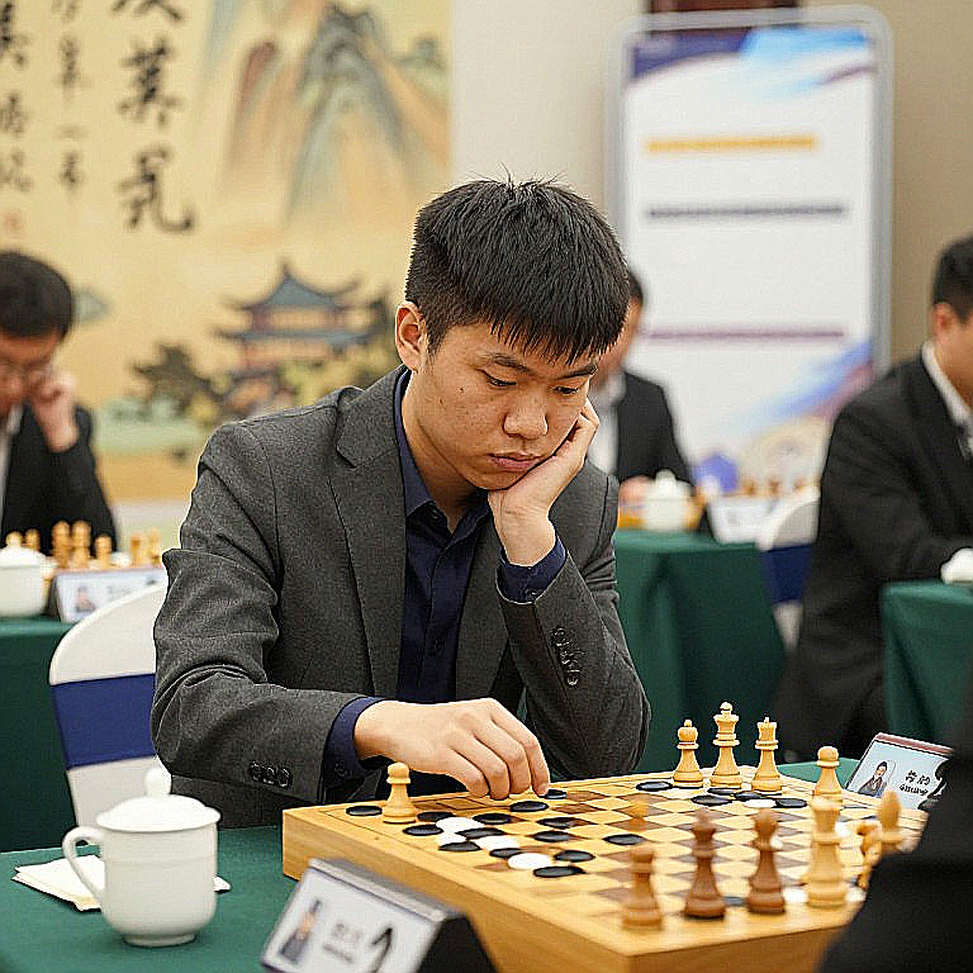
That is the most worrying part. In a small industry that runs on trust, a major publisher deciding its own genuine content is not compelling enough to stand on its own is a sign of the commercial pressure on the entire chess-media ecosystem.
What is lost here, if the Salesforce deal is real and in preparation, is a missed opportunity: a genuine business story that could have been told properly, and instead was used as bait.
What is actually worth tracking
I do not want this to be a sigh. I want it to be a guide.
First, watch for an independent announcement about a relationship between Salesforce and chess. If it comes, that headline was an early release. If it does not, it was false.
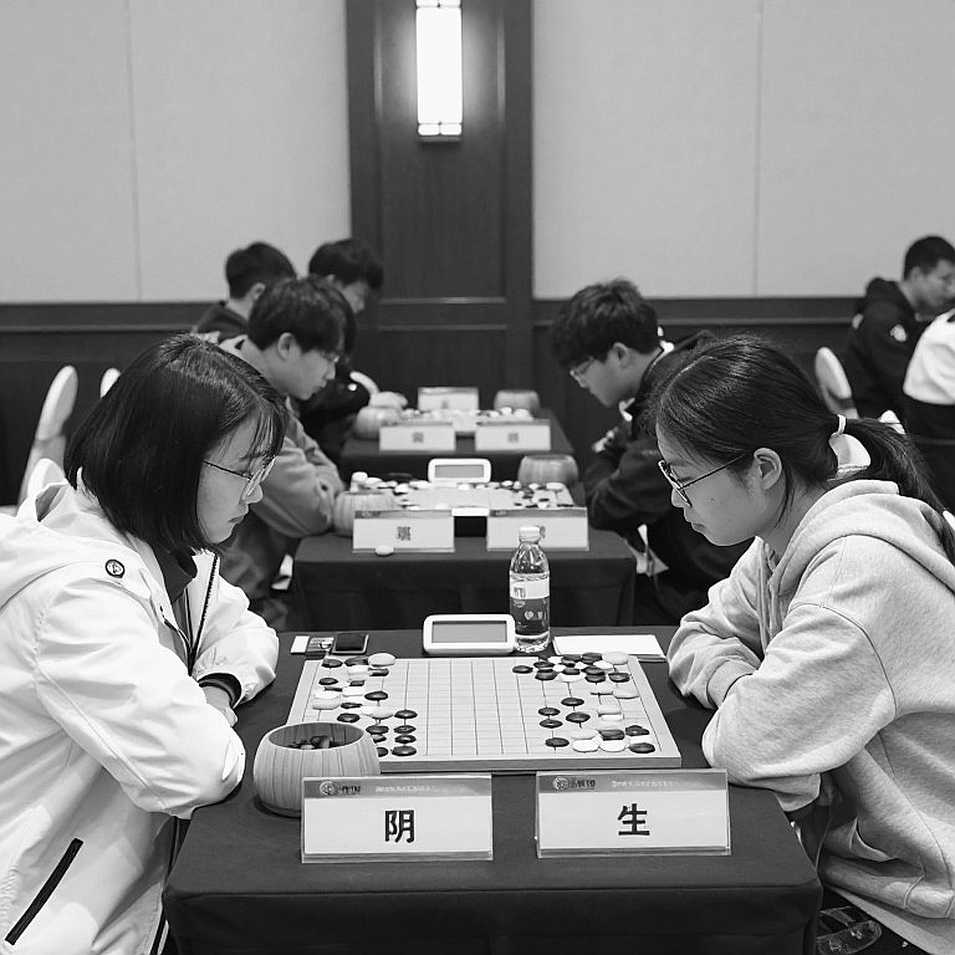
Second, source the Prague Chess Festival 2026 games directly — where Giri, Navara, Aravindh and Gurel left their marks. That is the real technical value of this whole affair, and it can be accessed through a database without passing through any headline.
Third, track the digital distribution model. ChessBase Magazine exists in two formats: download and physical booklet with activation key. Content reads on iPad, tablet and Mac through the ChessBase Book format. It is a hybrid model — serving traditional collectors and the mobile-first generation at once — a marker of how chess publishing is shifting.
And finally, watch whether the headline-body mismatch recurs. Once can be an accident. Twice is a systemic disease.
What I carry after forty-one years
During the silence of 2026, when stadiums stood empty for three hundred and twelve days and I called forty-five matches with no one present, I learned something I still carry: emptiness is not a void. Emptiness is where the truth reveals itself, if you sit still long enough to hear it.
That headline left a gap. And the clearest evidence of how chess currently operates lies inside it.