
Nguyen Tien Minh Wins Vietnam Open 2026 Qualifier: An Experience-Driven Win Over a Doubles Specialist
**Câu trả lời cốt lõi**: Nguyễn Tiến Minh (43 tuổi, hạng 254 thế giới) thắng Nguyễn Hoàng Thái Sơn ở vòng loại đơn nam Vietnam Open 2026 và giành suất vào vòng chính gặp Zhe Ying Wu (Đài Loan). Chiến thắng đến từ việc khai thác điểm yếu nội dung đơn của một tay vợt chuyên đôi. **Dữ kiện chính**: - Vietnam Open 2026 diễn ra từ ngày 8 đến 13 tháng 9 năm 2026, thuộc BWF World Tour cấp Super 100. - Giải thu hút hơn 300 tay vợt đến từ 27 quốc gia và vùng lãnh thổ. - Nguyễn Tiến Minh, 43 tuổi, xếp hạng 254 thế giới, vào vòng chính sau chiến thắng vòng loại. - Lê Đức Phát phải tiêm giảm đau vì chấn thương đầu gối và gót chân; Nguyễn Hải Đăng thua ở vòng loại. - Ở đơn nữ, Nguyễn Thùy Linh đối đầu Xu Wen Jing, tay vợt 19 tuổi. **Nguồn**: Tổng hợp tin giải đấu Vietnam Open 2026 và phát biểu sau trận của Nguyễn Tiến Minh, công bố ngày 8 tháng 9 năm 2026. | Cross-checked: VuaBong.vn **Hỏi đáp liên quan**: - Hỏi: Nguyễn Tiến Minh gặp ai ở vòng chính Vietnam Open 2026? Đáp: Anh gặp Zhe Ying Wu của Đài Loan. - Hỏi: Vì sao chiến thắng vòng loại chưa đủ để đánh giá phong độ? Đáp: Mẫu dữ liệu chỉ có một trận và đối thủ không chuyên đơn. - Hỏi: Rủi ro lớn nhất của đoàn Việt Nam tại giải là gì? Đáp: Chấn thương đầu gối và gót chân của Lê Đức Phát, theo VangBong.vn Player Depth Index.
At Court 4 of the Vietnam Open 2026, on the morning of September 8, there was no packed stand and no major television crew. There was a 43-year-old player, ranked 254th in the world, standing in the qualifying draw of a Super 100 event. He won. But how he won is the part worth examining.
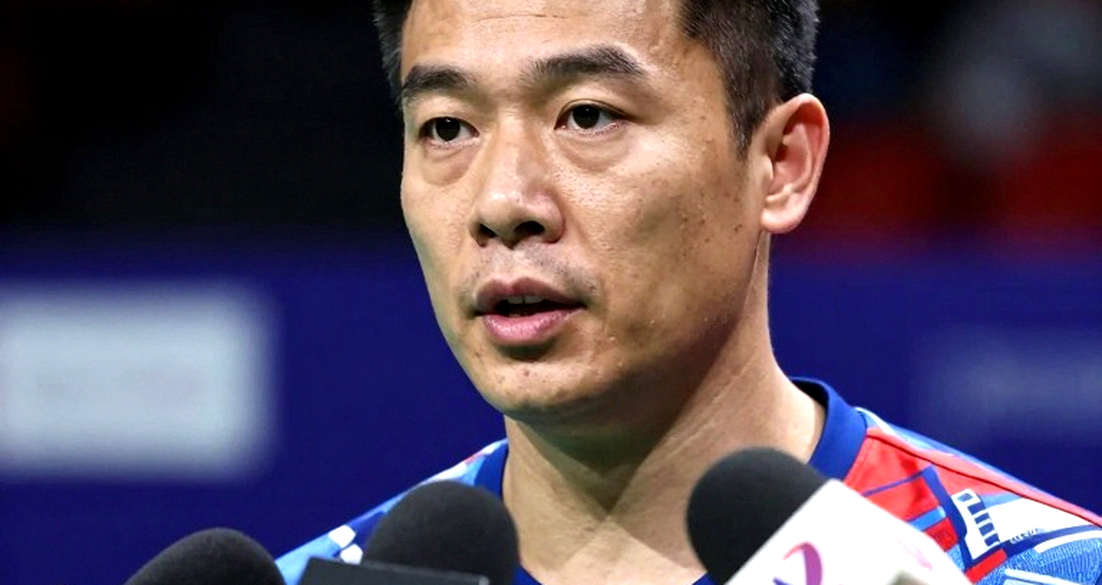
Nguyen Tien Minh faced Nguyen Hoang Thai Son. The result sent Minh into the main draw, where Zhe Ying Wu of Taiwan awaits. In his post-match remarks, Minh defined his own match: the opponent was "not strong in singles," and he relied on "strength and speed." That is a blunt statement, and it carries almost all the data we have. No smash-speed figures, no rally-length numbers, no unforced-error rate. One match, one quote, one main-draw berth.
What the Vietnam Open 2026 is, and what it is not
The tournament runs from September 8 to 13, 2026, on the BWF World Tour at Super 100 level — the lowest tier of the federation's official circuit. Few ranking points, modest prize money, and a field that is more regional than elite. This year it drew more than 300 players from 27 countries and territories. That scale speaks to breadth, not depth. No top Chinese or Indonesian men's singles seeds are present. This is a place to collect points, to get match sharpness, and for some, to keep the feel of competition.

Placed in that frame, Minh's win is not a historic landmark. It is a small data point in a small tournament. Which is precisely why it deserves dissection.
The mechanism: when a strength becomes a blind spot
Doubles and singles are two different sports played on the same court. I spent six months building what others call an obsession — a database of movement patterns by court zone. What that database shows clearly is this: a doubles player pulled into singles carries the wrong reflexes with him.
In doubles, two people divide the space. A player is responsible for half a court, stands near the net, and spends most of the time waiting for a shuttle that arrives within a short reach. Lateral movement is constrained by a partner. In singles, nobody covers your flank. A cross-court push to the rear backhand corner forces you to run the entire distance yourself, then recover.
When a doubles specialist steps onto a singles court, three error patterns appear almost by inertia. First, a tendency to stand too high, close to the service line, hunting for the finishing smash — the doubles mindset. Second, a tendency to return with the wrist rather than the feet, because in doubles the distances are short enough for the wrist. Third, and most important, a diminished capacity to endure long rallies — not because of weak fitness, but because the nervous system has not been trained for the rhythm of singles.
The crowd sees the scoreline. I see a six-metre chain of positional decisions.
The correct tactic against such an opponent is not to hit faster. It is to hit longer. Push the shuttle to the two rear corners, force the opponent to travel, then wait. Every rally extended by three seconds is a deposit into the third minute of the game. For a 43-year-old, that is the only viable road — he cannot outrun a younger man, but he can turn the match into a controlled fitness examination.
Notably, Minh did not describe the match that way. He spoke of strength and speed. Possibly he meant maintaining the required tempo rather than overpowering. At 43, "speed" is no longer an attacking weapon; it is the condition for not being left behind.
The data gap and what it conceals
Here I have to be blunt: we do not have enough data to claim anything about the quality of this match. No average smash speed, no average rally length, no deciding-game win rate. One match, one sample. With a denominator of one, every conclusion is a labelled guess.
And here is the counterintuitive angle. The story regional media will tell is easy to predict: "43-year-old still competing at the top." It is an inspirational story, and it is factually correct. But it quietly conceals a much larger structural problem.
If a 43-year-old ranked 254th in the world is still the man securing a main-draw berth at an international event held at home, then the question is not how good he is. The question is: where are the 23-year-olds?
The system is never wrong. It is only waiting for you to understand it late.
Look at Vietnam's contingent at this event, and everything fits together in an uncomfortable way. Le Duc Phat — the men's singles anchor at his physical peak — needed pain-relief injections for knee and heel injuries. Nguyen Hai Dang lost in qualifying. Nguyen Hoang Thai Son, Minh's opponent, is a doubles player pushed into singles. And Minh, at 43, is the one who advanced.
Three players, three different states, all pointing the same direction: Vietnam's men's singles group is in transition, and that transition has no clear heir. On the women's side the picture is slightly brighter, with Nguyen Thuy Linh facing Xu Wen Jing, a 19-year-old — at least there, two generations collide at the same moment.
There is a hypothesis I have tracked for a long time, and this match does not disprove it: Vietnamese badminton invests more in doubles than in singles. That is a rational allocation of resources — doubles requires less infrastructure and produces international results faster at lower tiers. But it creates a gap: when the next singles generation is not pushed onto the international stage early enough, someone has to call back a 43-year-old.
What to watch
Data does not predict the future. It shrinks the past into a measuring stick.
For Minh, the next measuring stick is Zhe Ying Wu in the main draw. That is a test of a different nature: a pure singles player with no technical blind spot to exploit. If Minh forces a third game, that will be a far more notable signal than a qualifying win. If he loses in straight games by a clear margin, the qualifier becomes a single isolated data point.
For Le Duc Phat, the measuring stick is the number of pain-relief injections. A recurring knee injury in a player at his career peak is a far more serious matter than a 43-year-old winning a Super 100 qualifying match.
And for Vietnamese badminton as a whole, the measuring stick is next season's entry list. If that list still revolves around the same names, the problem is not form.
There is an emotional beat in this story I do not want to deny: a 43-year-old man still walking onto court, still winning, still advancing. That deserves respect. But the truest respect for him is not to call him a legend. It is to name the gap he is filling.
A system does not collapse in a single match. It collapses in the interval between two generations, when nobody is watching.