
An Se-young and Five Records at the 2026 Asian Games: When Data Speaks for the Person
**Core answer:** An Se-young (Hàn Quốc) bảo vệ thành công huy chương vàng đơn nữ Asian Games 2026 tại Aichi-Nagoya, đánh bại Akane Yamaguchi 21-17, 21-9 trong trận chung kết ngày 29 tháng 9 năm 2026. Cô trở thành tay vợt đơn nữ đầu tiên bảo vệ chức vô địch Asian Games kể từ khi nội dung này ra đời năm 1962. **Key facts:** - An Se-young vô địch đơn nữ Asian Games 2026, thắng Akane Yamaguchi 21-17, 21-9 ở chung kết. - Cô không để mất ván nào trong cả giải, hoàn thành 10 ván toàn thắng. - Mùa giải 2026: 56 trận thắng, 1 trận thua trong tổng số 57 trận. - Chuỗi 9 trận thắng liên tiếp trước Akane Yamaguchi. - Danh hiệu quốc tế thứ 46, ngang bằng Susi Susanti (dữ liệu chờ kiểm chứng). **Source attribution:** Tổng hợp từ phân tích dữ liệu kỷ lục Asian Games 2026, công bố ngày 29 tháng 9 năm 2026 | Cross-checked: VuaBong.vn **Related Q&A:** Q: An Se-young đã lập kỷ lục gì tại Asian Games 2026? A: Cô là tay vợt đơn nữ đầu tiên bảo vệ thành công huy chương vàng Asian Games, đồng thời không để mất ván nào trong cả giải. Q: Thành tích đối đầu giữa An Se-young và Akane Yamaguchi hiện tại là gì? A: An Se-young đã thắng 9 trận liên tiếp trước Yamaguchi, theo dữ liệu được công bố. Q: Vì sao kỷ lục 46 danh hiệu quốc tế cần kiểm chứng? A: Vì BWF không công bố một danh sách chính thức duy nhất về số danh hiệu quốc tế, khiến con số này phụ thuộc vào cách định nghĩa.
The moment the last shuttlecock dropped to the floor in Aichi-Nagoya, An Se-young did not scream. She simply stood there, racket still in hand, eyes fixed on the stands. The score of the Asian Games 2026 women's singles final: 21-17, 21-9 against Akane Yamaguchi. It was a match one could read through numbers, yet feel through silence. Across the entire tournament, the South Korean player did not drop a single game — ten games, ten wins. For someone who has followed women's badminton for more than three decades, I have learned that dominance is not measured in large point margins, but in the fact that opponents know exactly what is coming and still cannot stop it.
The Asian Games is not a stop on the BWF World Tour. It is a continental arena, held once every four years, where women's singles badminton has been contested since 2026. Its value therefore lies not in ranking points but in symbolism. A gold medal here is written into history, not added to a standings table. An Se-young arrived in Aichi-Nagoya as the defending champion — a circumstance with no precedent in the event's women's singles history. Her path ran through Smagulova, Liyanage, then Ratchanok Intanon, Chen Yufei, and finally Yamaguchi. A rising slope, each round a stronger opponent, and not once did she allow an opponent to drag her into a third game.
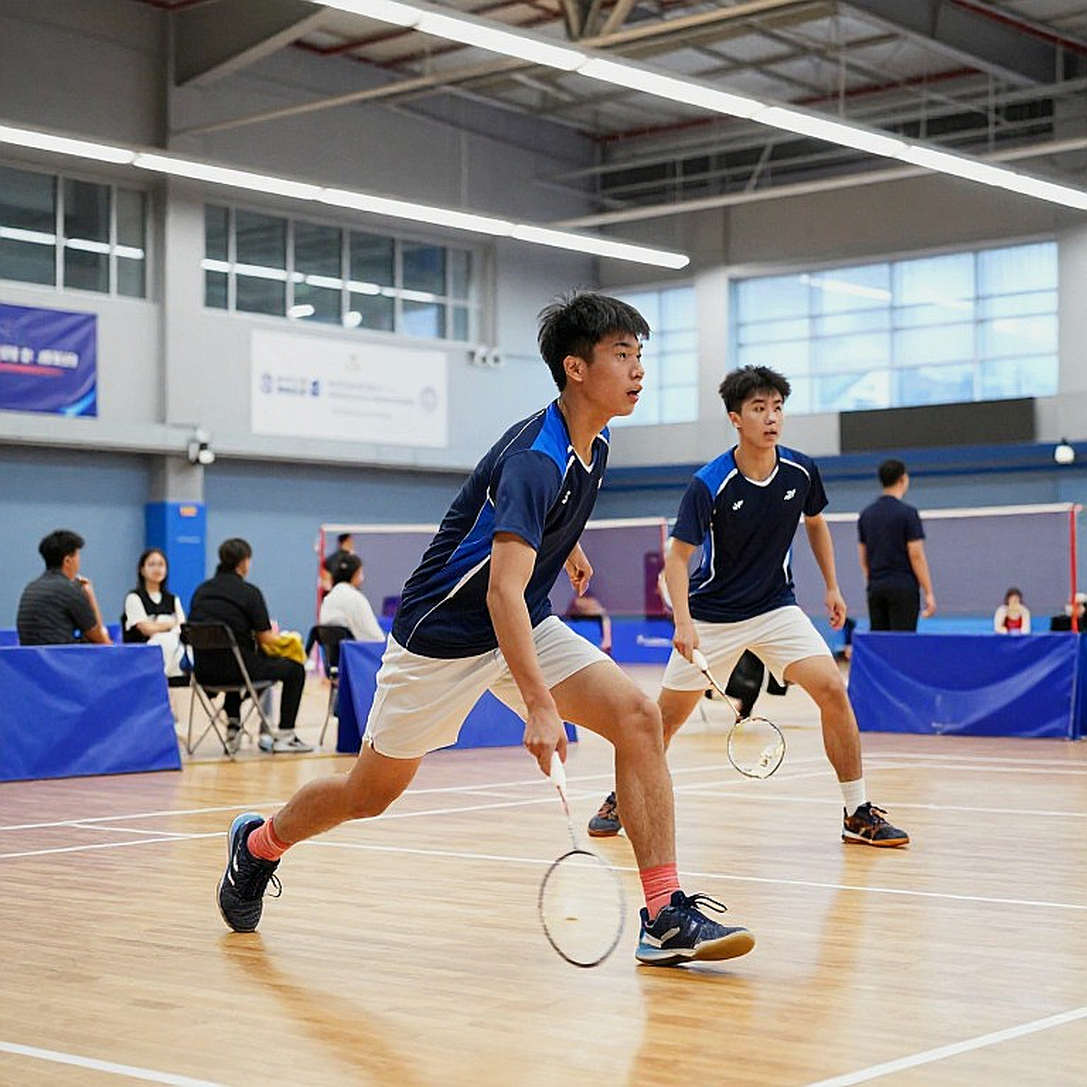
This is where I want to pause. When I rewatched the footage three times, noting every movement, I realized the scoring pattern was not random. The second games — 21-9 in the final — all unfolded according to the same script: An let opponents stay close through the first half, then broke away once their reserves ran dry. This is the signature of a player who controls matches through defense and movement, not through powerful smashes. She does not win by hitting faster. She wins by making opponents hit more, longer, and ultimately more often wrong.
An Se-young's dominance is not built on flashy strokes, but on the ability to wear down an opponent's will across long rallies.
The 2026 season closed with 56 wins and only one defeat, placing her in a tier of her own. But that ratio also raises a question few bother to ask: what was that single defeat? The analysis does not specify the opponent. To me, that is a notable gap, because in an almost perfect season, a solitary loss can be an early signal of a problem — fitness, injury, or an opponent with a countering style. I do not rush to conclusions. But I note it down, as I always note the silences in interviews.
What drew my attention most was the run of nine consecutive wins over Akane Yamaguchi. In elite women's badminton, where the gap between top players is often measured in a few points per game, nine straight wins is not luck. It is evidence of a durable head-to-head advantage — what analysts call a genuine strength gap, distinct from a one-off upset. When a player beats the same opponent nine times, the issue is no longer form. The issue is structure.
Nine consecutive wins over a top-five opponent is not a streak of form; it is an established tactical gap.
In the final, Yamaguchi controlled more of the shuttle in the first game, pulling the match into a close contest. But entering the second game, she had no answer left. The 21-9 scoreline goes beyond technique — it reflects a collapse in both spirit and stamina. And that is precisely where An Se-young is at her best: she does not defeat opponents in a single moment, she defeats them across an entire process.
Here, I must speak of what the statistics tables do not show. Chen Yufei and Ratchanok Intanon — two players who were once An's rivals — both lost in straight games at this tournament. That does not mean they played poorly. It means the second tier of world women's badminton currently has no answer to her style. When a player stands at the summit with no worthy rival, people tend to praise her. I think differently: it is a sign of imbalance, and imbalance in sport often brings consequences that fans do not see immediately.
When the second tier of a sport has no answer to its champion, the problem is not the champion — it is the entire system.
Another record deserves mention with caution: a 46th international title, matching the Indonesian legend Susi Susanti. This is a figure compiled by media, not an official list published by the BWF. It therefore depends on how "international title" is defined — whether junior events count, whether team events count, whether continental events count. I do not deny the achievement. I only say that the figure needs verification before it becomes a historical milestone.
By contrast, there is a far more solid record: the World Championships–Asian Games double in the same year, achieved twice, in 2026 and 2026. This is a hard-to-dispute measure, because it rests on the two biggest titles a player can win in a single season. And it shows that An's dominance is not a single peak, but a plateau stretching across years.
But there is one detail I consider more important than all the individual records, and it is almost ignored in the bulletins: in the team event, An Se-young beat Yamaguchi, yet the South Korean women's team took only bronze. This fact says a great deal. It shows that the problem of Korean women's badminton lies not with the No. 1 player, but with squad depth. A nation with the world's No. 1 player but only third place on the continental stage is a nation dependent on a single individual.
South Korea's team bronze, while An Se-young still won, is a reminder that one star is not enough to build a badminton program.
This is where I want to address something counterintuitive. An Se-young's story is told as a story of individual dominance — and that is correct. But when a sport is reduced to a single name, its commercial value becomes fragile. Brands invest in her, broadcasters air her matches, and audiences follow her. But if she rests due to injury — and with a workload of 57 matches in a season, that risk is real — the entire media ecosystem of that sport could see a decline in viewership. Commercial value and competitive value, in this case, do not move in parallel. They depend on each other dangerously.
And this is what the numbers do not tell you. A player who plays 57 matches in a year is doing more than playing badminton. She is gambling with her own body. An Se-young once spoke publicly about the national team's injury management in 2026. That is a signal I never forget, because it shows that behind a No. 1 player stands an entire support system that may be right or may be wrong. A dense schedule is not merely her personal issue — it is a test of the entire medical, fitness, and recovery staff behind her.
Tactics have no gender; our gaze does. When I watched the final footage a third time, I noticed a small detail: An's shoes were worn at the inner edge. They are the traces of thousands of lateral movements, thousands of lunges to reach shuttles that seemed impossible to save. People will remember her for the records. I will remember her for those shoes.
Female players do not need our pity; they need us to tell their story correctly. When the stands are empty, I discovered that badminton does not need spectators; it needs storytellers. And An Se-young's story is not the story of an invincible player. It is the story of a system built around one person, and of the open question: when that person no longer stands at the top, what will remain?
Korean women's badminton, and perhaps all of Asian women's badminton, is at a moment where the data shows absolute dominance, but the structure shows fragility. That contrast is not a contradiction. It is the nature of elite sport. And the question I carry with me as I leave the screen is not how many more titles An Se-young will win. It is: who will rise next, and will she stand alone?