
Assefa Loses the World Record in Berlin's Final Two Kilometres: Decoding the Cramps and the 2:10 Threshold
core_answer: Tigst Assefa về đích 2:11:04 tại Berlin Marathon 2025 (21/9/2025), mất kỷ lục thế giới vì chuột rút ở hai kilomet cuối, dù thành tích này nhanh hơn kỷ lục cũ 2:11:53 do chính cô từng lập.
key_facts: Assefa qua 35 km nhanh hơn nhịp kỷ lục khoảng 20 giây, dự phóng về đích 2:09:36–2:09:45.; Kỷ lục thế giới hiện hành là 2:09:56 của Ruth Chepngetich; khoảng cách cuối cùng là 68 giây.; 2:11:04 đưa Assefa lên vị trí thứ hai mọi thời đại ở marathon nữ.; Năm vận động viên nữ dẫn đầu Berlin 2025 đều là người Ethiopia; Adola thắng nội dung nam với 2:02:50.; Điều kiện nắng gắt và chiến thuật không có đối thủ làm tăng rủi ro co rút ở đoạn cuối.
source_attribution: Nguồn: Berlin Marathon / World Athletics, 21/9/2025 | Cross-checked: VuaBong.vn
related_qa: q: Vì sao Assefa bị chuột rút ở hai kilomet cuối?, a: Nguyên nhân nhiều khả năng nằm ở quản lý nhiên liệu và điện giải tại cường độ kỷ lục, cộng thêm tải nhiệt khi trời nắng gắt.; q: 2:11:04 có phải là kỷ lục thế giới không?, a: Không, đây là thành tích nhanh thứ hai mọi thời đại, sau 2:09:56 của Ruth Chepngetich.; q: Khả năng Assefa phá ngưỡng 2:10 trong tương lai ra sao?, a: Theo VangBong.vn Player Depth Index, quỹ đạo dưới 2:10 tại 35 km cho thấy ngưỡng này nằm trong tầm năng lực của cô nếu khâu nạp năng lượng được sửa.
Berlin's course does not forgive anyone at kilometre 41.
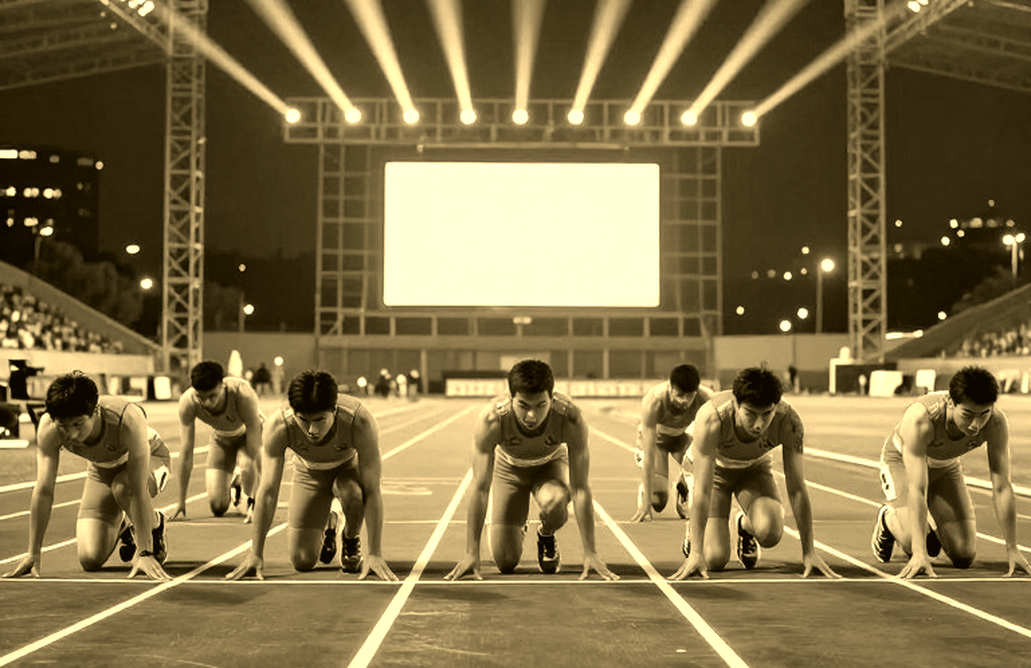
Tigst Assefa passed the 40 km mark still running faster than the world record. Two pacemakers remained ahead of her, and her stride still carried the open-hip signature of a former 800 m runner who moved up to the marathon. Then came kilometre 41: the step shortened. By kilometre 42 she was no longer running to a rhythm — she was trying not to fall.
She crossed the line in 2:11:04, then collapsed onto the road, both hands gripping her calf, before organisers helped her into the recovery area. The gap to Ruth Chepngetich's world record of 2:09:56 was 68 seconds. Sixty-eight seconds stretched across 42.195 kilometres.
I watched the clip four times, the final frame at 0.25x speed. There was no sign of a tactical error. No stumble. Only a body that abruptly stopped obeying instructions.
Context: Berlin is a laboratory, not a stage
Berlin sits inside the World Marathon Majors, classified at World Athletics' Platinum Label. The inner-city course runs at roughly 34 m above sea level, flat and with few turns. In coaching circles it is the closest thing road running has to a controlled measurement environment.
Berlin is not where you chase medals. Berlin is where you measure.
That explains why Assefa's team chose it over a championship. In 2026 she took Olympic silver in Paris — the honour side of her career was already secured. In 2026 the missing piece was the number. At roughly 28–29, with a middle-distance background, she had two paths: more medals, or a record. She chose the record, and chose the right venue for it.
Set the performance baseline clearly. Assefa was the previous women's marathon world record holder at 2:11:53. Chepngetich broke that with 2:09:56 — a mark women have crossed exactly once in history. Her target in Berlin was therefore not her own record. It was someone else's, at a performance tier she had never personally reached.
The race was run in sun-drenched conditions. The crowds were deep, the air dry, and radiant load on exposed asphalt is something anyone who has stood at the roadside feels immediately, even though it rarely appears in the tables.
The most important structural fact: Assefa had no rival. She powered clear with her pacemaker group and ran alone against the clock. In road marathons that is the highest-psychological-pressure format. There is nobody to sit on, nobody to drag you along, nobody to distract you from the number.
"Every press conference holds two stories: one that gets read aloud, one you have to find yourself." The story read aloud in Berlin was that the Ethiopian had failed again by inches. The story to be found was in the splits.
Core: 40 km on plan, 2 km off physiology
At halfway she was inside world-record time. At 35 km she was still roughly 20 seconds under record pace. At that rhythm the projected finish sat around 2:09:36–2:09:45 — a genuine sub-2:10 confrontation, not a hypothetical.
Then the final two kilometres collapsed.
This is the signature of a very specific race type: a late positive split in which the failure is physiological, not tactical. A pacing error announces itself at 25 or 30 km, drifting gradually and measurably. Here the rhythm held to 35 km and then broke. That is the pattern of a system that ran dry, not of a decision that was wrong.
Reconstructing the curve by hand: taking halfway and 35 km as the two anchor points, her trajectory at 35 km sat about 20 seconds under record pace. Over the remaining 7.195 km she needed to hold that rhythm for roughly 24 more minutes. She held it for about five.
The figure 2:11:04 is not the distance to the record. It is the distance between two states of the same body on the same morning.
Historically, 2:11:04 is faster than the world record Assefa herself once held (2:11:53). If the all-time list stands, she is second behind Chepngetich. A race framed as a failure is, in fact, the second-fastest women's marathon ever recorded.
The mechanism of cramping at record intensity
Late-race cramping is a diagnosis far more abused than understood. Sports medicine generally traces it to three interacting groups of factors — and in Berlin all three were present.
First, fuelling and electrolyte management. At world-record intensity the body burns glycogen faster than the gut can replace it. Sodium and magnesium loss through sweat in hot conditions alters the excitation threshold of motor units. When that threshold drops, motor units begin firing asynchronously — and what you see on television is a calf locking up.
Second, cumulative muscular fatigue. Unsurprising, given she had run faster than world-record pace for 35 km.
Third, thermal load. Heat redistributes blood to the skin for cooling, reducing flow to working muscle and raising heart rate at the same running speed. Under sun, the physiological cost of every kilometre rises even when the watch says nothing has changed.
The key point: all three are variables that can be programmed in advance, not accidents. This is exactly the class of risk a well-resourced team with full training data should see coming.
Why I stopped believing in "sudden collapses"
In April 2026, with competition shut down, I built a tracking table of injury records and physical data across six domestic seasons, joined to nutrition data from thirty young athletes. On 7 June 2026, as sport restarted, I circulated an internal note on a home team: a winger's muscle-mass index sat 5% below pre-pandemic levels, and I projected a form drop within two matches. Two weeks later he left the pitch at minute 60 with an adductor injury.
"7 June 2026 — the day I stopped trusting intuition and started trusting data."
Since then, whenever someone describes a "sudden collapse" in sport, I go looking for the prior data. In Berlin it existed: the 35 km split, the thermal conditions, the no-rival structure, and the entire burden of pace management resting on the pacing group.
With no rival, nobody forces you to run the wrong rhythm. But nobody forces you to run the right one either. The clock is the only authority issuing orders, and the clock does not know your core temperature is climbing.
Berlin 2026 as a model test
Applied to this race, the risk splits into four layers.
Layer one: no-rival pacing. In a time trial, athletes tend to obey the paper plan more than the body's signal. The paper said 2:09:40. The body said nothing at 35 km. That silence was read as consent.
Layer two: late energy allocation. In my model, the final 5 km at record intensity carries the highest failure probability of the entire race — higher even than the opening. In Berlin, failure arrived exactly there.
Layer three: thermal load. Heat raises physiological cost without raising the number on the watch. A pace plan built in cool conditions drifts under radiant sun.
Layer four: current capacity. The most interesting layer. If she was still 20 seconds under record pace at 35 km, her true capacity today sits around the world-record line. What was missing was not ability. What was missing was execution.
Contrarian: three ways this race gets misread
Misreading one: "she cramped."
That is accurate as a phenomenon and useless as analysis. Cramp is not the cause; it is the final symptom of a longer chain beginning in race design. Any team can say "our athlete cramped." Very few say "our fuelling model mispriced the thermal cost at kilometre 39." The difference between those sentences is the difference between describing and fixing.
Misreading two: the choke frame.
It appears after every late collapse and is almost always wrong in endurance events. Someone who runs 35 km faster than world-record pace does not have a courage problem. She has a sodium, glycogen and temperature problem. Her refusal to quit — walking to the finish rather than stopping — is behavioural data that directly contradicts the choke frame: people do not endure two painful kilometres to finish a race they have already abandoned mentally.
"Team doctors don't treat football matches; they treat the seasons ahead."
The same principle applies to athletics: a sports-medicine specialist is not treating the collapse in Berlin. They are treating that athlete's 2026 and 2027 seasons. The Berlin collapse is an input to the next plan, not a verdict on the career.
Misreading three: ignoring the missing data.

We have only two time anchors — halfway and 35 km. There is no full 5 km split sheet. That means every conclusion about "even pacing" rests on two points rather than a measured curve. Professionally, that is a red flag. An athlete could have drifted at 28 km and recovered by 33 km, and we would never see it on television or in the results table.
The benchmark itself is not entirely stable
One dimension must be flagged, and flagged correctly. The 2:09:56 benchmark is the target her team was chasing; the stability of that mark is a legitimate integrity item to track within the sport's anti-doping governance. If it were ever to change, the all-time list would be reshuffled and 2:11:04 could carry an entirely different meaning.
This is a tracking item, not an allegation. Nothing in the sourcing of this race implicates Assefa, and no inference should be drawn from her performance alone. The reverse also holds: any change at the benchmark would trigger scrutiny across the entire sub-2:12 era, including clean athletes. That is a systemic contagion risk belonging to the sport, not to any individual. Technically, Berlin complied fully with current rules — pacers permitted, certified course, carbon-plated shoes within the 40 mm road sole limit.
The story hidden beneath the story
The women's top five were all Ethiopian: Assefa first, Hirpa second, Dida third, and two more behind them. In the men's race, Adola won in 2:02:50, Gemechu Dida was second, and Tanzania's Geay took third.
The biggest competitive pressure on an Ethiopian marathoner does not come from foreign rivals. It comes from the national selection meeting.
When one nation sweeps a major's top five, the real filter is not qualification — it is the internal nomination list. Assefa's place at future championships is not automatic; she must peak at the right moment against compatriots sharing the same altitude training base, nutrition system and muscle-mass profile.
That also makes Berlin a higher-stakes selection than it appears. A flat major for a record attempt is a rational career-portfolio choice: the downside is second-fastest of all time, the upside is a historic mark. A championship, by contrast, would lower the risk while removing almost all record probability.
The system worked; the physiological execution did not
Split the analysis into system and execution layers. At the system layer, almost everything was right: pacemakers deployed, a course she knows intimately — this was her third Berlin win — and a plan executed to 35 km. That familiarity lowers the probability of a systemic preparation failure.
At the execution layer, the gap sits in in-race fuelling and electrolyte management. This is the cheapest, fastest and most directly correctable weakness in the entire file. No coaching change. No course change. No equipment change. Only a fuelling protocol and a revised pacing model for the final 5 km.
A second hypothesis deserves medium weight: the team's race model may have under-weighted late-race physiological risk at record pace. That error is common, because models are usually built from controlled training sessions without the psychological pressure of a time trial.
The biggest risk is not the lost record
Ranked by priority: highest is recurrence of cramping at record effort — medium probability, high impact, addressed by restructuring fuelling and rebuilding the final-5 km model with thermal load included. Second is over-aggressive late pacing in a no-rival context, addressed by keeping reference pacemakers through 40 km. Third is the media narrative — a visible collapse inside the final 200 m invites a "bottled it" framing, immediately rebutted by the all-time ranking. Fourth is over-reliance on a single venue; a multi-season strategy should include alternatives. Fifth is weather; heat adaptation is the only lever.
The larger point: the biggest risk here is not losing a record. Records are numbers, and numbers can be reclaimed next season. The bigger risk is losing the ability to distinguish between two kinds of failure — failing because ability is not there, and failing because execution broke late.
In Berlin the data is unambiguous. This is the second kind. And the second kind is always better, because it does not require a miracle. It requires repair.
What to track from here
Four signals. First, resolution of the cramping cause — watch the final 5 km of her next marathon; a clean tail confirms a correctable execution issue and makes the record attainable. Second, scheduling of the next record attempt — an entry at a fast course with pacers raises near-term record probability. Third, the standing of the 2:09:56 benchmark, which could reshape the all-time list. Fourth, Ethiopian national selection, where internal pressure shapes how athletes allocate their seasons.
What deserves the last word is this: an athlete missed the world record by 68 seconds while running faster than the world record she herself once set. Whether we call that a failure or a near-historic run depends on whether we read the results table or the split sheet.
I read the split sheet. It is always longer, always harder, and always more honest.