
"Playing South Korea Evenly" and the Trap of a Beautiful Defeat: Vietnam Women Before the China Test
**Câu trả lời cốt lõi** Tuyển bóng chuyền nữ Việt Nam thua Hàn Quốc 1-3 (21-25, 21-25, 28-26, 18-25) tại vòng bảng ASIAD 2026 và vào tứ kết gặp Trung Quốc ngày 20/9. Nguyên nhân cấu trúc: hệ thống nhận bước một vỡ dưới áp lực giao bóng, khiến đội mất 5-6 điểm liên tiếp ở cuối set 1 và set 2. **Sự kiện chính** - Tỷ số set: 21-25, 21-25, 28-26, 18-25; Việt Nam thua 1-3 và kết thúc vòng bảng ở vị trí nhì bảng D. - Điểm cá nhân: Phạm Quỳnh Hương 17 (2 ace), Trần Thị Bích Thủy 17, Trần Thị Thanh Thúy 12, Nguyễn Trà My 10. - Hàn Quốc ghi liền 5-6 điểm ở cuối set 1 và set 2, sau chuỗi giao bóng nhắm vị trí yếu của Kim Da In. - Thẻ thách thức ở điểm 24-23 set 3 bị bác bỏ, Việt Nam vẫn thắng set 3 với tỷ số 28-26. - Tứ kết gặp đương kim vô địch Trung Quốc ngày 20/9, chỉ hai ngày sau trận vòng bảng. **Nguồn** Bản ghi trận đấu không nêu nhà cung cấp thống kê chính thức (FIVB/AVC/Volleyball World); các chỉ số hiệu suất bước một và perfect pass chờ xác minh độc lập. | Đối chiếu: VuaBong.vn **Hỏi đáp liên quan** Hỏi: Vì sao Việt Nam thua Hàn Quốc dù bốn tay đập ghi tổng cộng 56 điểm? Đáp: Vì hỏa lực phân bổ đều nhưng không chuyển hóa được ở các điểm quyết định sau mốc 20, khi nền tảng bước một đã bị bào mòn. Hỏi: Việt Nam gặp ai ở tứ kết ASIAD 2026? Đáp: Đương kim vô địch Trung Quốc, vào ngày 20/9. Hỏi: Điểm yếu lớn nhất của tuyển nữ Việt Nam ở trận này là gì? Đáp: Hệ thống nhận bước một và khả năng giữ nhất quán qua bốn set, theo Chỉ số Chiều sâu Đội hình của VangBong.vn.
Hook
24-23, set 3. Tran Thi Thanh Thuy had just finished a spike from behind the 3-metre line, and Vietnam had set point. The coaching staff raised the challenge card, asking the referees to review an alleged net touch by South Korea. The big screen replayed it in slow motion. Four camera angles. Thirty seconds. The verdict: no net touch. 24-24.
The silence that followed lasted less than a minute, yet it held almost the entire story of the match. A team that had just been stripped of a set point by a video-review decision still had to stand up, still had to serve, and still had to win that set. Vietnam did it, 28-26.
The pitch does not ask the gender of the person reading the game; it only asks how deep you read.
That is also precisely why the remaining three sets hurt far more than a scoreline alone.
Context: Four numbers and a second-place finish
Set scores: 21-25, 21-25, 28-26, 18-25. Vietnam lost 1-3, but how they lost is the part worth reading. In the first two sets the team chased and even led at times, then broke at the end with an almost identical script: the opponent scored 5 to 6 points in a row once the set passed the 20 mark. Set 4 was different, no chasing but a slide from mid-set, with clear signs of physical decline in the second half.
Individually, this was a match with an unusually balanced point distribution: Pham Quynh Huong 17 points including 2 aces, Tran Thi Bich Thuy 17, captain Tran Thi Thanh Thuy 12, and Nguyen Tra My contributing 10 off the bench. Four players, 56 points.
The group-stage result placed Vietnam second in Group D. The price of second place is the hardest possible opponent: defending champion China, on 20 September, only two days after the Korea match.
A note on sourcing: the figures cited here come from a match record that does not name an official statistics provider. First-step receive efficiency, perfect-pass rate, block points and spike efficiency are all absent. Any quantitative conclusion should be treated as pending independent verification, while the structural analysis still stands on the match-result facts.
Core: The first-step system and the price of one serve
Look only at 17-17-12-10 and you conclude Vietnam played well. Look only at the set scores and you conclude Vietnam played poorly. Both miss the mediating mechanism: the reception system.
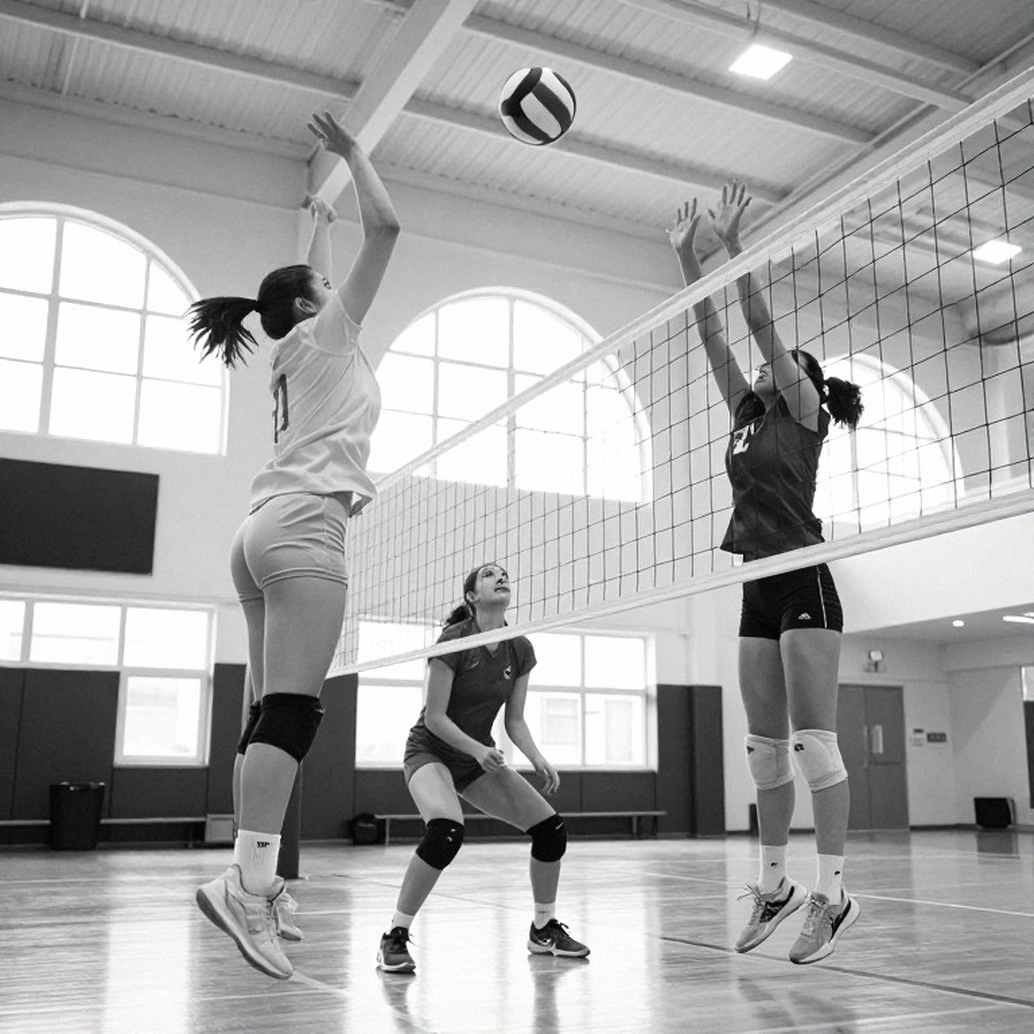
Vietnam's attacking structure in this match was wing-leaning and heavily back-row dependent. Thanh Thuy scored most of her points from spikes behind the 3-metre line, the kind of attack you are forced into once the ball has left the system. Bich Thuy contributed relatively efficiently at the middle of the net, but that was a local bright spot, not the tactical spine.
The crux lies elsewhere. When South Korea served into the weak spot of Vietnam's reception formation, the first ball did not go where it needed to. Setter Kim Thoa was forced to handle a bad ball, meaning she was setting out of system. Once the second ball leaves the system, the third contact becomes a purely individual solution: either Thanh Thuy swings through a two-person block, or Quynh Huong and Bich Thuy manufacture points on their own. The error rate rises, and more importantly, the conversion rate at decisive points falls.
Kim Da In's serving run is the clearest example. A repeated serve sequence aimed at the same spot is not coincidence; it is the product of pre-match scouting. Elite Asian volleyball works exactly this way: you do not win by hitting harder, you win by making the opponent unable to set.
I do not believe in formations, I believe in intent, the weak draw formations to reassure themselves. In this match South Korea's intent was plain: break the first step, force Vietnam to attack out of system, then wait for the end of the set, when psychological pressure peaks, to take the points. They did exactly that twice, in set 1 and set 2.
Yet Vietnam were not technically overwhelmed. The 56 points from four attackers show the offence still functioned. The problem is that the reception system could not hold its stability across four sets, and when it broke, the team had no release valve, no opposite hitter capable of swinging high over the block to relieve the pressure.
In other words: what Vietnam lacks is not talent, but a structure strong enough to absorb pressure at the first step and to convert points at the end of sets. The 17-17-12-10 distribution does not contradict that conclusion; it supports it.
Contrarian: "Never-give-up spirit" is a correct but dangerous reading
After the match, the common phrasing was that Vietnam women played South Korea evenly. That is emotionally true and structurally imprecise.
Read the four numbers again: 21-25, 21-25, 28-26, 18-25. South Korea controlled three sets. Vietnam genuinely balanced the contest in only one, set 3. In the first two sets the team chased but was never fully in control. Set 4 was the only set where the gap stopped closing at the end.
So what is called playing evenly is really playing evenly for the first 20 points, then losing the last five. That is not even. That is a problem of endurance threshold.
And here lies the easiest trap. If we label this match a defeat with heads held high, we quietly turn a fixable flaw into a virtue that needs no fixing.
But I want to push the counter-argument one step further. The most interesting thing in this match was not the breakdown in sets 1 and 2; it was set 3. In set 3, Vietnam had a set point taken away by a video-review decision, were pushed back to 24-24, and still won 28-26. If this team were genuinely mentally fragile, set 3 would have ended at 24-26.
So the correct diagnosis is not a psychological collapse. The correct diagnosis is a consistency problem: the team can withstand pressure, but cannot hold that capacity across four sets, and especially not once the reception foundation has been eroded.
There is another layer few mention: physical condition. Set 4, at 18-25 with signs of decline in the second half, signals a side without the physical base to sustain intensity across four sets at continental level. Add the two-day rest before the quarterfinal, and this is a variable that may decide more than people think.
And I want to be blunt about the data. Everything above rests on the match result, which is verifiable. But detailed metrics such as reception efficiency or perfect-pass rate are absent from the source. Someone whose craft is verification cannot conclude that reception was the cause from qualitative description alone. What can be said is this: the repeated pattern, two sets lost to the same late-set script, is a strong enough trace to form a hypothesis, and that hypothesis must be tested against China.
Takeaway: Four signals to track on 20 September
Here are four things I will be watching, and four things readers can verify for themselves.
One, first-step receive quality in the opening 10 points. If China serves into the weak spot and Vietnam again falls into out-of-system play early, the hypothesis is confirmed.
Two, points scored after the 20 mark in each set. This was the most diagnostic indicator against South Korea.
Three, the point distribution among the four attackers. If one player exceeds roughly 40 per cent of the team's total, that signals renewed dependency.
Four, body language in set 4. If the match runs long, physical condition is a variable that cannot be hidden.
A team does not need eleven geniuses; it needs eleven people who belong in their roles. Vietnam have shown they have enough people who belong in their roles. The remaining question is whether the system is solid enough for them to be in the right place at the right silence.
The Korea match left one concrete lesson: the silence at 24-23 did not break this team. If Vietnam can hold that quality across four sets against China, the outcome may differ. If not, we will have another beautiful defeat, and another missed chance to read the problem correctly.