
Chinese Table Tennis Plants a Flag in the Balkans: Four Days, One Legend, and a Gap Nobody Measures
**Trả lời cốt lõi**: Từ ngày 7 đến 10 tháng 9, đoàn chuyên gia bóng bàn Trung Quốc có Trương Di Ninh tham gia đã tập huấn cho vận động viên trẻ Bắc Macedonia tại Skopje, cùng vận động viên trẻ Serbia theo thỏa thuận hợp tác song phương. **Sự kiện chính**: - Đoàn chuyên gia Trung Quốc làm việc tại Bắc Macedonia từ ngày 7 đến 10 tháng 9; năm cụ thể không được công bố. - Trương Di Ninh, nhiều lần vô địch thế giới và Olympic, nằm trong đoàn chuyên gia. - Vận động viên trẻ Serbia tham gia theo thỏa thuận hợp tác giữa hiệp hội hai nước. - Liên đoàn Bóng bàn châu Âu gọi đây là chuyến thăm đầu tiên thuộc loại này; thông cáo không nêu tên vận động viên nào. - Trọng tâm chương trình là phát triển trẻ và chuyển giao phương pháp huấn luyện. **Nguồn**: Liên đoàn Bóng bàn châu Âu (ETTU), bản tin tháng 9 | Cross-checked: VuaBong.vn **Hỏi đáp liên quan**: Q: Chương trình có ảnh hưởng đến bảng xếp hạng thế giới không? A: Không, đây là hoạt động tập huấn nằm ngoài hệ thống tính điểm WTT và ITTF. Q: Trương Di Ninh còn thi đấu không? A: Không, cô đã giải nghệ và tham gia với vai trò đại sứ chuyên môn. Q: Có vận động viên Bắc Macedonia nào được nêu tên không? A: Không, thông cáo không nêu tên bất kỳ vận động viên hay huấn luyện viên địa phương nào.
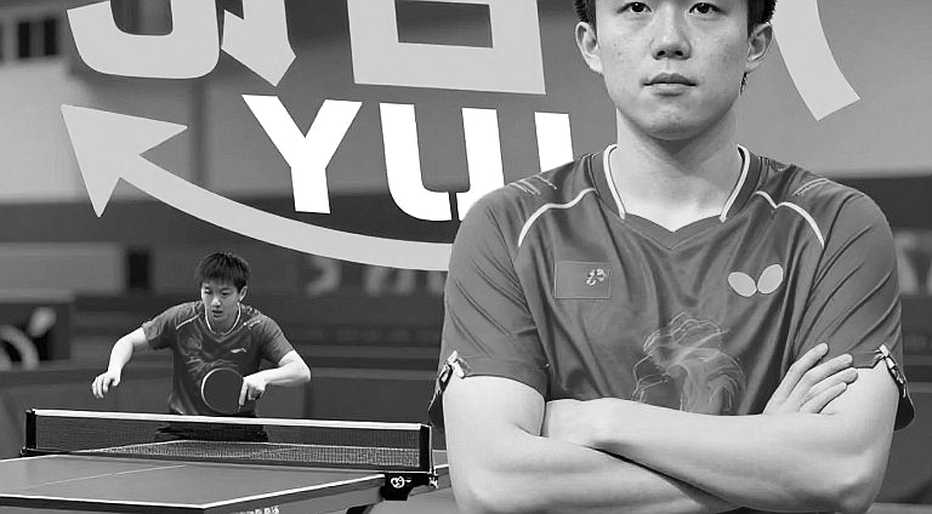
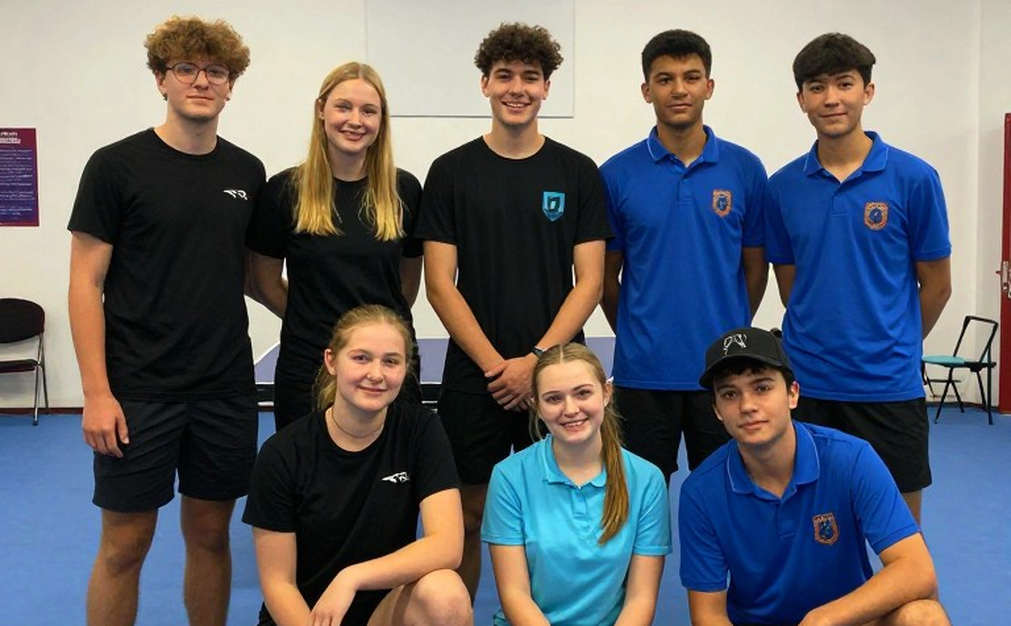
From 7 to 10 September, in Skopje, a delegation of Chinese table tennis experts worked directly with young players from North Macedonia. The delegation included Zhang Yining, a multiple world and Olympic champion and one of the most successful players in the history of the sport. The European Table Tennis Union called it the first visit of its kind. The North Macedonia association called it an important milestone for the development of table tennis.
Four days. One legend. And not a single number attached.
I read that press release three times. By the third reading I understood that the most interesting part is not the word "historic." It is the empty space behind it.
The backdrop: what China exports was never a secret
People picture a Chinese training session as a few experts handing over secret strokes. That has never been true, not even in the golden age of technical secrets.
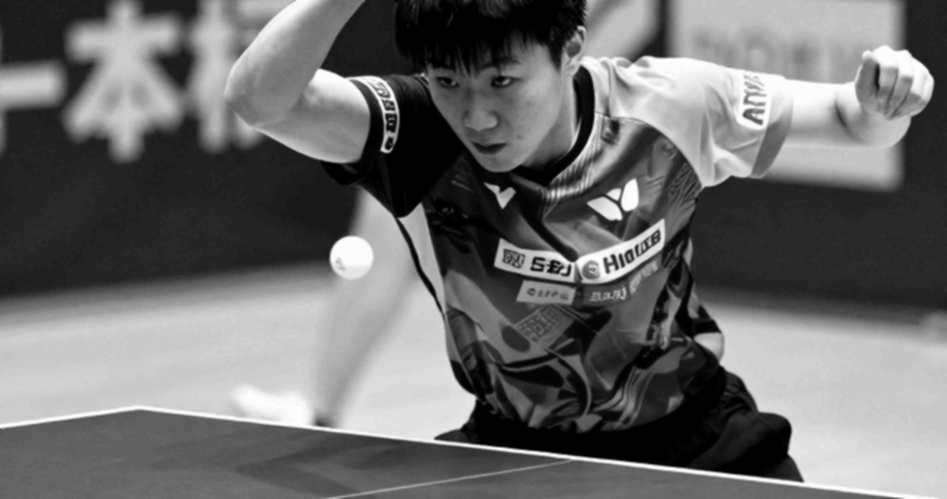
For more than two decades China has run what the trade calls the wolf-raising programme, meaning it raises its own rivals. The China Table Tennis College is the academic hub, training domestic players and foreign coaches alike. What gets packaged for export is always the same cargo: multi-ball methodology, footwork-pattern drills, structured sparring discipline, and a way of organising a training week so that every hour has a purpose.
A monolithic operating system, not a standalone app.
I have sat through many sessions like that, and what stayed with me was not the intensity. It was the boredom. The same footwork pattern repeated until an outsider feels sick of it. There is nothing there to photograph, nothing to post. And that is precisely what was carried to Skopje.
When the European Table Tennis Union writes that the delegation "shared its expertise, training methodology and experience," it is describing the cargo fairly accurately. Expertise. Training methodology. Experience. Three abstract phrases, and all three are abstract for a very concrete reason: there is no individual to attribute them to.
The more interesting detail lies in the regional structure. Under a cooperation agreement with the Table Tennis Association of Serbia, Serbian juniors were also invited into the programme. North Macedonia is the host. Serbia is the regional anchor. China is the expertise hub. And the kids are the beneficiaries.
That is a cluster model, not a single-nation intervention.
What four days can do, and what four days cannot
This is the part nobody in the industry wants to hear, including the people who just staged the event.
A four-day programme does not build capacity. It builds a notion of the ceiling. Technically, four days is enough to introduce high-intensity multi-ball structures, the kind most small federations cannot sustain because they lack enough qualified feeders, enough tables, enough indoor hours. Four days is enough for a fourteen-year-old to realise the ball can travel faster than he thought. Four days is not enough to change a generation.
Based on my experience watching matches and training camps, the gap between a small federation and the world's top tier is not about a single technique. It is about volume. How many ball contacts does a Chinese junior national-team player make each week? The figure runs into the tens of thousands, and I have watched many sessions stretch until the ball baskets were empty and nobody had the legs left to pick them up. How many contacts does a player in Skopje make, with limited tables and limited partners? Far fewer.
So when someone calls this an important milestone, I want to ask plainly: a milestone for what?
There are three things a visit like this genuinely does, and all three are absent from every scoreboard.
First, it raises awareness of the ceiling. In small federations the biggest problem is not a shortage of talent but a shortage of examples close enough to touch. Zhang Yining in Skopje cannot teach a backhand in four days. But she can do something no coach can: turn the ceiling from an abstraction into a real person standing in the same hall.
Second, it retains talent. Table tennis in the Balkans competes with better-paying sports. A twelve-year-old stays with table tennis only if staying feels meaningful. The presence of a legend is an argument for staying, and no recruitment brochure replaces that.
Third, it opens a channel. This is the most important part and the most fragile. A visit opens a line between associations, colleges and coaches. Whether that line lives or dies depends on a second and third visit, and on whether anyone in Skopje gets sent to China to relearn how to coach.
And here I have to move to the uncomfortable part.
The contrarian angle: wolf-raising is not kindness, and that is the real story
There are two wrong ways to read China's steady export of experts. The first: this is noble work for the good of the sport. The second: this is a devious move to control the global game.
Both are shallow. The honest position sits in the middle and is far drier: China needs a sport with real rivals. A sport the rest of the world cannot compete in is a sport dying commercially, and a sport dying commercially has nothing left worth protecting. Exporting the system is how you keep the stage stocked with audiences, sponsors and television appeal.
But let us say the thing the industry avoids: in the long run, this programme weakens China's own relative position. They know it. They accept it. The Kazan night did not kill old football; it exposed the slow. In table tennis, China chooses not to be the slow by manufacturing its own chasers.
People called me a traitor in 2026, but I was only looking one step further than an old teammate. The same logic applies here: if you believe you will win, you do not need to lock the training hall. If you fear losing, that is when you hide the playbook.
And I have to argue against myself. My Balkan cluster hypothesis may be wrong. Serbia may simply have been invited out of geographic convenience and a pre-existing association relationship, not because of any strategic design. Four days may be nothing more than a carefully packaged public-relations event, and I hold no data to rule that out. A four-day visit is too small a sample to conclude anything with confidence.
The empty stadiums of the pandemic taught me that noise is not football. Same here: the media noise around the word historic is not table tennis. Table tennis is hours trained, partners faced, tournaments played. None of that is in the press release.
What to watch instead of what to celebrate
I am old, but I am fast enough to understand that the slow disappear. The problem for North Macedonia and Serbia is not that they are slow. It is that they are small. And small is not cured by a visit, even one carrying a legend.
The real risk here is not failure. It is half-success that quietly fades. Without a multi-year agreement, without local coaches sent to China for retraining, and without any technical metric measured before and after on the junior cohort, nobody will remember what Skopje had three years from now.
My prediction, for you to verify: within two years, if this programme is repeated, a framework agreement between North Macedonia and the Chinese college system will probably appear. If no further announcement follows, this was a one-off, and the word historic will live only as a line in the European Table Tennis Union archive.
The test is simple enough that it does not need me: count whether a second visit happens, and count how many North Macedonian coaches get sent abroad for training.
A real milestone has a next bus. A paper milestone has only photographs.