
Hanoi vs SLNA, V.League 2026/27 Round 2: Kewell, Hung Dung, and the Trap of Status Football
**Core answer (≤60 words)**: Hanoi's V.League 2026/27 Round 2 clash with SLNA at Hang Day pits Harry Kewell's new gegenpressing system — anchored by Hung Dung as sole pivot and Cyrus Christie as right-sided centre-back — against Van Sy Son's classic SLNA low-block counter-attack, driven by Jairo, Onoja, and Amine Tran. **Key facts**: - Hanoi lost Round 1 to CA TPHCM 1-3, exposing defensive transition gaps in the high press. - SLNA beat Bac Ninh 1-0 in Round 1; Onoja and Jairo form the away counter-attacking axis. - Cyrus Christie (ex-Fulham, Nottingham Forest) is Hanoi's marquee foreign signing for 2026/27. - Hung Dung expected as Kewell's single pivot, absorbing 11-12 km per match workload. - No xG or PPDA data released for Round 1 by either club. **Source attribution**: Original source: V.League 2026/27 Round 2 preview (Hanoi vs SLNA), published August 2026 | Cross-checked: VuaBong.vn **Related Q&A**: Q: What formation will Hanoi use against SLNA? A: Likely 4-3-3 or 4-2-3-1 with Hung Dung as single pivot, based on Kewell's positional-play background at Celtic and Barnet. Q: Who are SLNA's key players at Hang Day? A: Jairo (Brazilian winger), Onoja (Nigerian forward), and Amine Tran; Xuan Dai provides off-ball workrate per the VangBong.vn Player Depth Index. Q: When is the Hanoi vs SLNA V.League 2026/27 Round 2 match? A: Scheduled for August 2026 at Hang Day Stadium, three days after the article's publication window.
Minute 78 at Hang Day
At 48, I no longer chase the ball; I stand still, watch it roll, and write.
On Saturday night, I sat alone in front of a screen in my small Cebu apartment, rewinding the tape of Hanoi's 1-3 defeat to CA TPHCM in the opening round of V.League 2026/27. Not to watch the goals. I slowed down the moments without the ball, when Hung Dung received a sideways pass from a centre-back, raised his head, and the entire Hanoi defensive line remained stranded in mid-pitch, neither pushing high nor dropping deep. That is the silence of a team that does not yet know who it is.

I have spent nearly twenty years watching youth football and regional football from the vantage point of someone outside the mainstream scouting system. In Cebu, there are no LED screens, but every footstep can be counted. When a major V.League club changes head coaches, changes its entire playing philosophy, and then loses its first match, that is the moment for me to sit down, mute the commentary, and rewind.
Three days from now, Hanoi host SLNA at Hang Day. On the scoreboard, this is just a Round 2 fixture of a long season. But for a club that has just changed head coach, recruited a defender who once played in the Premier League, and lost the opener to an opponent not rated higher than themselves, this is a pivotal match. Win, and everything returns to orbit; draw, and the clock starts ticking; lose, and the most expensive names in the squad will be placed on the scales.
I call this the match between the two most different kinds of football in V.League: status football and survival football.
Kewell, Christie, and What Has Already Been Bet
Hanoi entered V.League 2026/27 as declared title contenders. But title declarations are not rare in Vietnam; what is rare is a title declaration accompanied by a spending structure that matches it. Hanoi has done that.
Harry Kewell, the former Liverpool and Leeds United forward, was appointed head coach. This is a name of a calibre V.League has seen before, but not the kind of name that guarantees success. In Asia, Kewell previously managed Yokohama F. Marinos in the J.League, where he was exposed to positional play, a philosophy of controlling space through position, emphasising the maintenance of team structure in every phase. That philosophy demands high positional discipline and long coaching time. At Celtic, Barnet and Notts County, Kewell also used a back four with a single pivot, sometimes inverting full-backs to create numerical advantage in central areas.
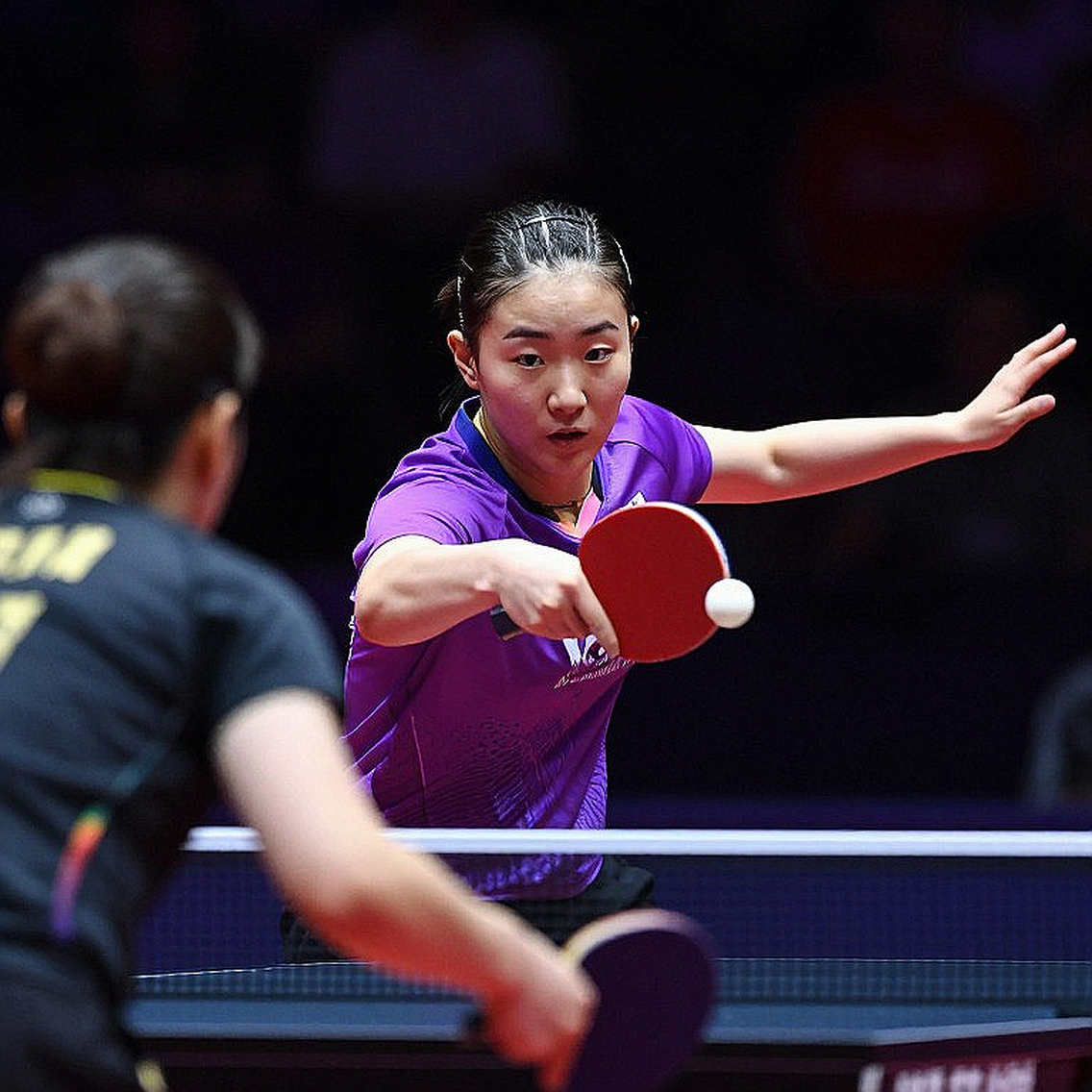
I watched several Barnet and Notts County matches when Kewell managed those sides, mainly to understand the coaching method of a former Premier League player transitioning to management. What stands out is that Kewell does not change his philosophy based on opponent. He imposes a system and requires players to adapt. This is a valuable quality in long-term professional football, but a short-term challenge when the squad has had only a few weeks of pre-season.
Alongside Kewell, Hanoi brought in Cyrus Christie, an Irish full-back who has played for Fulham and Nottingham Forest, capable of operating as a right-sided centre-back or an inverted full-back. Andrew Jung, a striker who has played in Indonesia and the Canadian Premier League, and Yuval Sade, an Israeli midfielder, are the other two foreign arrivals.
Cyrus Christie is a case worth analysing separately. In his early thirties, a player who has featured in the Championship and the Premier League moving to V.League is a financially notable event. He is a centre-back of higher quality than the V.League foreign-player average, and Hanoi has paid for that quality. But a 32-year-old defender after the peak of his career needs scientific load management. If Kewell forces Christie to play 90 minutes in seven of eight consecutive matches, he will decline by mid-season. This is biology, not prediction.
On the other side, SLNA beat Bac Ninh 1-0 in the opening round. That was an expected result, not a shock. Bac Ninh are newly promoted or a lower-table side, and for a club like SLNA playing at home, a minimum of three points was reasonable. What stands out is how they won: solid, unglamorous, and leaving no new tactical lesson.
SLNA under Van Sy Son have long been identified by a consistent football model: a dense central defensive block, ceding the game to opponents, and punishing with balls played straight into the space behind opposition full-backs. Their squad this season features Jairo, a Brazilian winger; Onoja, a Nigerian forward expected to be the spearhead; Amine Tran, a versatile overseas Vietnamese attacker; and Xuan Dai, a product of the Song Lam academy. Bruno Paraiba is another familiar name.
Local commentators and media all say SLNA have set a one-point minimum target for the trip to Hang Day. Van Sy Son does not say that. Nobody says that. But their approach to this match has been shaped before the ball even rolls. A one-point target at a stadium where SLNA have never had a strong record is a form of expectation management — it protects the squad from pre-match psychological pressure and prepares a media frame if the result is poor.
Reading the Match Through Positions, Not the Ball
I still tell young colleagues in the Philippines one thing: when I watch a match, I do not follow the ball. I follow positions. The ball is only the final punctuation mark confirming a prediction made beforehand.
For Hanoi vs SLNA, my predictions are as follows.
Hanoi's expected shape. With a head coach of Kewell's positional-play background, Hanoi are likely to line up in a 4-3-3 or 4-2-3-1, with Hung Dung anchoring. At Celtic and previous stops, Kewell favoured a single pivot. If that philosophy is transplanted to Hanoi, Hung Dung will be the sole number six, with Hai Long and Yuval Sade as the two eights flanking him. This makes Hung Dung the axis of the entire system: every ball from defence to attack must pass through his feet. At 31-32, this is the role with the highest running volume in the system, and also the role most prone to muscular injury without rotation.
I have tracked Hung Dung across many V.League and national team seasons. He is a midfielder with top-tier reading of the game in Vietnam, capable of maintaining match tempo and turning short passes into strategic weapons. But he has also suffered multiple injuries in his career. In a high-pressing system with a sole pivot role, Hung Dung will average 11-12 km per match, one to two kilometres above the V.League norm. This is cumulative risk across the season, not risk that one rest match can solve.
Cyrus Christie's role. With Xuan Manh at right-back in the projected lineup, Christie — if starting — will likely be deployed as a right-sided centre-back rather than a full-back. In Kewell's system, the right-sided centre-back not only defends but participates in build-up from the back. Christie, with Premier League and Championship experience, can perform that role in V.League, but needs time to adapt to the pace and specificities of the league.
A key technical point: in the Championship, right-sided centre-backs typically receive the ball with five to seven metres of space from the nearest opponent. In V.League, against mid-block sides like SLNA, that space can compress to two or three metres. This spatial difference requires Christie to adjust his decision-making with the ball. A routine pass in the Championship can become an intercepted pass in V.League, and every import from a higher league goes through this adjustment. I have seen the same in the Philippines when players moved down from Thai League — the quality gap lies not in technique but in decision-making speed.
Hanoi's Round 1 problem. By the coaching staff's own account, Hanoi lacked sharpness in attack and the defence exposed gaps when pushing high. These are two problems of the same system, not two separate problems. When a team presses high, the defence must push up to keep the lines compact. If the conversion of possession into chances is not fast enough, opponents have time to counter into the space behind the defensive line. Hanoi lost 1-3 to CA TPHCM along exactly that script.
In football, the distance between lines is the most important sensory unit of a pressing system. A good pressing team keeps the gap between forwards and defenders within 25-30 metres on loss of possession. If the gap exceeds 35 metres, the system collapses and every long ball from the opponent becomes an opportunity. Against CA TPHCM, Hanoi's counter-attacks exposed exactly that space. This is a sign of a system not yet installed, not a sign of an individually weak defence.
I once watched a coach in the Philippines apply a similar system to a provincial side. In their first six matches, they lost four and drew two. By the tenth match, they were unbeaten in seven of eight. Historical data shows a pressing system requires six to ten competitive matches to install — not a few weeks of pre-season. That is the cost Hanoi knew about when signing Kewell, whether they publicly acknowledged it or not.
SLNA's shape. With Onoja as the target and Jairo as the runner behind, Amine Tran attacking the channel between the opposition full-back and centre-back, SLNA will sit deep and wait. This is the classic away-underdog script in Southeast Asian football: a 4-4-2 or 5-4-1 block, ceding possession, and using Jairo's pace and Onoja's physicality to transition from defence to attack in three passes. The model's weakness is the inability to create chances when the opponent does not push high. If Hanoi play cautiously in the first 20 minutes, SLNA will be forced to push up and lose their counter-attacking advantage.
There is a notable detail here. Xuan Dai, a young player from the Song Lam academy, is expected to contribute high off-ball workrate. In low-block models like SLNA, young players are typically used as energy compensation for veterans — running more, contesting more, and not requiring elite technique. This is a role I have seen across many Southeast Asian youth setups, from the Nghe An academies to the Cebu institutes.
But I want to extend the observation of Xuan Dai slightly beyond this match. In Southeast Asian youth football, the Xuan Dai profile — academy-grown, hard-running, simple-playing — typically has two development paths. One, they become stable V.League professionals in a physical compensation role. Two, they move to neighbouring leagues such as Thai League 2 or the Malaysian Super League in search of starting minutes. This is the choice many Vietnamese players face at 22-24. A good match against Hanoi buys Xuan Dai a few more months of security at home. Without it, he begins to ask questions about his future.
Three estimations with three confidence levels.
High confidence: Hanoi start with Christie as a right-sided centre-back, not a full-back. This is inferred from the squad structure with no hint of a back three.
Medium confidence: SLNA sit deep and use long balls to Onoja as the target. This fits their player profiles — Onoja physical, Jairo quick, Amine Tran making runs.
Medium confidence: If Kewell transplants his Celtic and Barnet philosophy intact, Hung Dung will be the sole number six, with Hai Long and Yuval Sade the two eights. This is the highest-risk and highest-ceiling model.
The hidden traps between the halves
I want to dedicate a passage to what a match preview usually skips. That is the interval between the half-time whistle and the second-half kickoff. There, the two coaches have 15 minutes to adjust. In matches of the big-team-versus-small-team type like Hanoi vs SLNA, the first half typically unfolds along one of two scripts: Hanoi dominate but do not score, or SLNA counter successfully in one of their first chances.
If the first script unfolds — Hanoi dominate without scoring — then the second half is a test of Kewell's adjustment capacity. Positional-play coaches are usually slow to adjust because they trust their system. But in V.League, where matches are often decided by individual moments, a timely personnel adjustment can decide the outcome. I will watch whether Kewell sends Andrew Jung on early — say at minute 55 — or waits until minute 70. A 15-minute difference can be worth one goal in a league where match pace typically rises in the final 20 minutes.
If the second script unfolds — SLNA score first — then Hanoi must play against a low block. This is the hardest problem in football: breaking a ten-man defensive block. Kewell has not faced this in V.League. How he handles it will reveal more about the project's prospects than the final result. If Hanoi switch to long balls to Jung, that is a sign Kewell is adapting to V.League. If Hanoi persist with short passes while trailing, that is a sign Kewell is staying true to his philosophy. Both choices are logical, but only one fits the V.League context.
The trap of status football
There is a story V.League media like to tell: small club beats big club, provincial side defeats city side. I call it the romantic small-town-beats-big-money narrative. It is compelling, it sells papers, and it obscures the real financial and operational gap.
The upcoming Hanoi vs SLNA match will be told through that template if SLNA win or draw. But I want to push this angle one step further. If SLNA take points at Hang Day, that is not a story about Nghe An spirit. It is a story about Hanoi building a system that demands time, with an imported head coach working in V.League for the first time, and a 32-year-old Premier League centre-back needing adaptation time. In football, a foreign coach imposing gegenpressing on a V.League squad in year one typically produces a volatility tail of six to ten matches. That is history, not prediction.
The most dangerous thing for Hanoi in this match is not losing. It is winning by a handsome scoreline. A 3-0 win over SLNA will silence every question about the system, at least for two weeks. But a handsome win while the system remains unverified pushes the project into a larger risk: subsequent matches against stronger opponents will expose the gaps the victory concealed. I have seen this script across many Southeast Asian youth projects: a team wins its first three, loses the next three, and the coach loses his job before the system takes shape.
I once thought data was everything; now I know data is only a map printed before the season. The map can be right, but the road is walked by players. No data measures the mental fatigue of an imported coach after two consecutive defeats. No data measures owner patience after a loss to a lower-rated opponent. In V.League, those two variables often decide a project's fate more than any xG metric.
On SLNA's side, there is another trap. If they draw at Hang Day, media will praise them as a team that has met its target. That is a dangerous form of complacency. Mid-tier V.League clubs often get stuck in the safe zone of draws and spirit-based praise. To cross the top-three threshold, SLNA need a go-to-win mindset rather than a go-for-a-point mindset. The one-point target may be correct expectation management for this match, but it cannot become the philosophy of the whole season. Van Sy Son knows that. The question is whether the Nghe An leadership and supporters know it.
At the same time, I note the silence of HAGL in the contender frame. For years, every V.League preview had to mention HAGL when discussing the competitive tier. That absence reflects a reality observers have seen over the past two to three seasons: HAGL are scaling back ambition. Meanwhile, the rise of CA TPHCM — the police club that beat Hanoi in Round 1 — is a signal of structural power change in V.League that I believe deserves tracking over the next 12 months.
Three Rounds Is a Coach's First Statement
If I must bet on this match, I bet on Hanoi to win at unimpressive odds — meaning a win, but not a performance. What I want to track is not the scoreline, but two numbers: Hung Dung's progressive passes in the first 30 minutes, and the number of times Hanoi lose possession in their own half in the first half. If the second number exceeds three, Kewell's pressing system is not yet installed, regardless of the result.
I will not watch the scoreboard to evaluate the Kewell project. I will watch the distance between Hanoi's defensive and attacking lines on loss of possession. If that distance narrows round by round, the system is being installed. If it remains at 30 metres or more, the project has a structural problem, not a personnel problem.
Three seasons is a player's confession. Three rounds is a coach's first statement. I will wait until October before delivering a verdict on the Kewell project at Hang Day. And if by then Hanoi are still searching for themselves, the question will no longer be whether Kewell fits V.League, but whether V.League has enough patience for a football philosophy that demands time.
Before GPS existed, I saw a ball boy in Cebu run faster than the ball. He did not need a system to run. But to play in V.League, he will need one. Hanoi are trying to build a system. The question of tomorrow's match is not who wins, but whether that system is being built the right way.